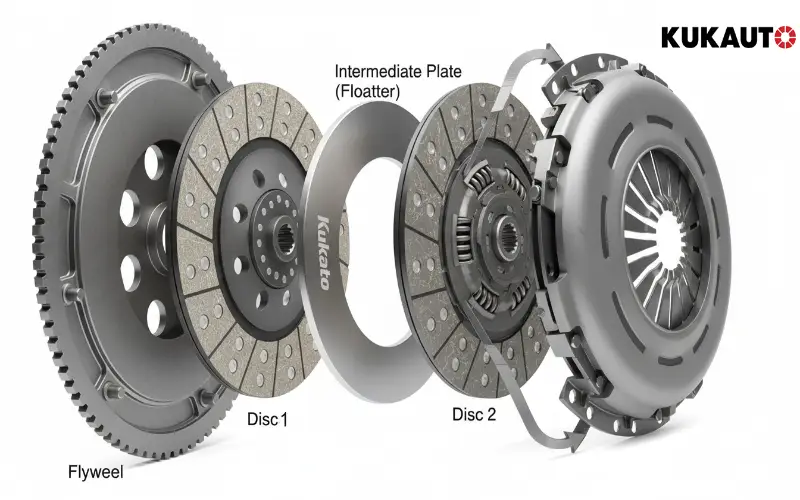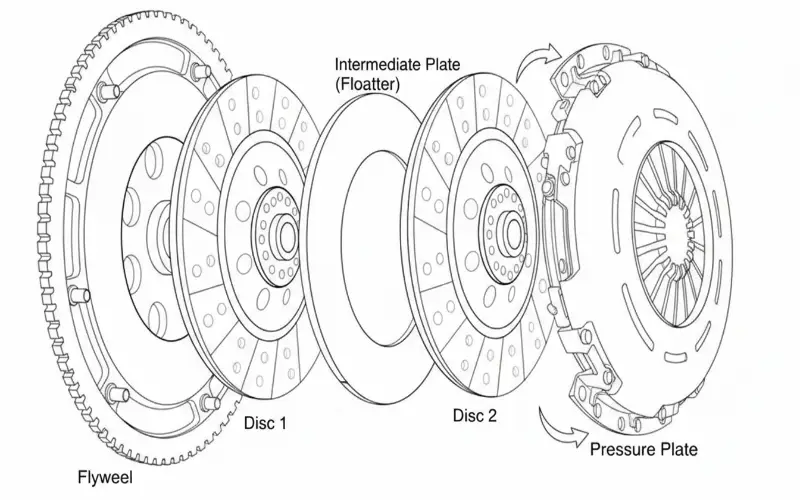

Resembles like a dinner plate, the clutch-driven disc is a crucial component in manual transmission vehicles. The disc stays between the flywheel and the clutch pressure plate.
The role of a clutch disk is to engage and disengage the transmission from the engine. In short, it transfers power from the engine to the transmission.
Have you ever wondered how a clutch disc manufacturer makes it?
This post makes you aware of the complete manufacturing process of a clutch disk.
Whether you are a clutch disc wholesaler or supplier, getting informed of the process helps you make an informed decision.
Before we jump into the main topic, let us look at the global clutch disk market size.
Global Clutch Disc Market
The growth of the clutch disc market depends on the automotive industry.
The demand for vehicles is growing continuously. Therefore, the clutch disc market is also gaining substantial growth.
If we look at the global clutch disc market size, it was around USD 3.98 billion in 2018. As the prediction suggests, it can become a USD 5.28 billion market by 2026.
Experts have estimated that the market may grow with a CAGR of 3.60% during this period.
Step-by-Step Guide to the Clutch Disc Manufacturing
Designing of Clutch Disc
Before the actual manufacturing procedure begins, a team of designers and engineers creates a blueprint with the help of software.
The team discusses different factors of clutch discs. For example, the dimension of the disc, its friction quality, and material choice.
Selection of the Material
The durability and performance of a disc plate depend on its material to a large extent. Therefore, a clutch disc manufacturer must use premium-quality materials.
Generally, the friction material is made of ceramic or semi-metallic materials.
Some manufacturers also make friction materials from organic substances. For hubs, they primarily use high-quality steel.
The Clutch Disc Production Process
The manufacturing of a disc plate goes through the following phases.
Preparation of Material
The manufacturing procedure starts with the processing of different raw materials.
First, workers cut steel sheets into the defined shapes for the hub.
Subsequently, friction material undergoes molding and curing treatment in the clutch disc factory. These procedures help engineers meet the desired density.
Attaching Friction Material
Once the friction lining is treated, it is attached to the clutch disc frame with the help of rivets.
This process requires careful attention to achieve a strong bond. Ultimately, the clutch disc has to endure the pressure of constant engagement and disengagement.

Integration of spring
Next, engineers place damping springs between the layers of friction material. It helps in maintaining the balance of the disc.
Moreover, springs ensure smooth engagement by absorbing vibrations.

Balancing
Accuracy is quite crucial when it comes to clutch disc balancing. It ensures even weight distribution.
An imbalanced clutch disc can cause several issues. It can vibrate and cause problematic operation in the transmission system.
Heat Treatment
Once professionals have assembled the clutch disc, it needs heat treatment. The technique is necessary for ensuring the durability and strength of the clutch disc.
The heat treatment process involves quenching and tempering optimization of the material properties.
The treatment helps the clutch disc withstand high mechanical stress.
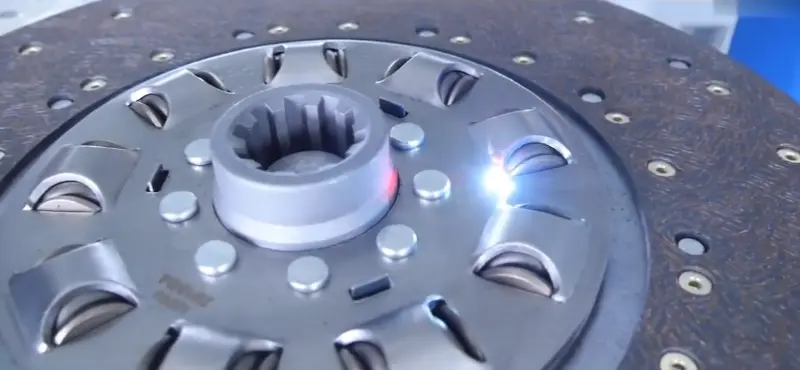
Quality Control Throughout the Manufacturing Process
A quality analysis team continuously monitors the product during production. It helps them identify and fix possible defects on time.
Quality control is the practice of checking the clutch disc for performance. It involves the inspection of material, disc dimensions, and surface finish.
In addition to this, the team checks the clutch disc endurance in real-world conditions. They use clutch discs under different operating conditions.

The complete quality analysis process goes like this:
Inspection of Material
Quality analysts inspect the quality of all raw materials. They ensure that they are meeting the required standards for heat resistance and strength.
Analysis of Dimension
The dimensions of a clutch disk need 100% accuracy. A slight issue with thickness and shape may result in poor performance. Therefore, the quality team takes precise measurements.
Inspection of Surface
The quality team discards all the clutch discs with cracks, scratches, and uneven surfaces. Even surface imperfection can affect the performance and durability of discs.
Examination of Friction Material
In this process, the examiner checks whether or not the friction material has strong bonded.
The Advanced Equipment Used in Manufacturing of Clutch Disc
Today, most clutch disc manufacturers invest heavily in state-of-the-art technologies to make international standard clutch discs.
In a clutch disc factory, you can see machines like power presses, heat treatment machines, glue-hardening furnaces, cutting tools, jigs fixtures, and more.
Nowadays, engineers use artificial intelligence-assisted machines that offer high precision and quality. In addition to this, they have improved production several times.
Conclusion
In this post, we discussed a step-by-step process for manufacturing a clutch disc.
Manufacturing a quality clutch disc requires engineering expertise. From the design to quality checks, clutch manufacturing involves various steps.
Some new clutch disc suppliers work with an inexperienced manufacturer. Remember, it can affect your business negatively.
Go with a manufacturer having a strong R&D team and high manufacturing capacity. They should provide clutch discs that meet international standards.
FAQs
1. What are the primary materials used in manufacturing a clutch disc?
A clutch disc comprises a hub, friction material, and damping springs to absorb vibrations. The hub is made of high-grade steel, while the friction plate could be ceramic, semi-metallic, or organic. Damping springs are generally made of high-quality steel or a steel alloy
2. What role does automation play in modern clutch disc production?
Today, most manufacturers have an advanced clutch disc factory featuring cutting-edge technologies and equipment.
Automation in clutch disc manufacturing brings high precision, consistency, and efficiency. The AI-enabled machine helps makers increase their output while maintaining quality.
3. How to choose the right clutch disc manufacturer?
While there are several parameters you should consider when choosing a manufacturer, the primary ones include:
Reputation and Experience
Look for the one that has a solid reputation and extensive experience in the industry.
Technological Capabilities
Make sure the manufacturer equips advanced technologies and equipment for their production process.
Quality Assurance
The manufacturer must have a track record of adhering to strict quality control measures. Check for their certifications.
Option for Customization
Go with a clutch disc company that provides customization options. Remember, different vehicles may have distinct clutch disc configurations.
4. How many parts does the clutch disc include?
Generally, a clutch-driven disc consists of three main parts. These include the friction material, the hub, and the springs/dampers.
5. Are clutch disc and clutch disk the same thing?
Yes, both clutch disc and clutch disk are the same thing. These are just spelling variations. It is a rotating part within the clutch system. It enables the vehicle operators to engage and disengage the engine from the transmission.