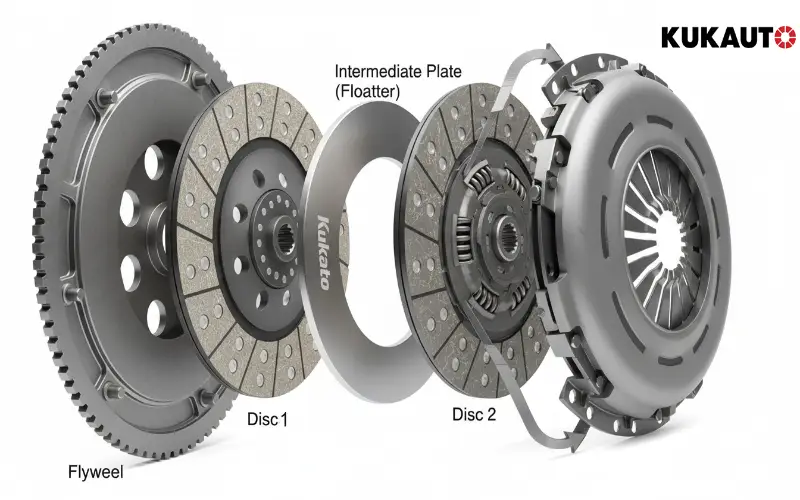

Introduction: It’s All About Surface Area
In the heavy-duty world, torque is the currency of power. But torque is useless if you cannot transmit it from the flywheel to the transmission input shaft. The limiting factor in this transfer is friction surface area.
The Core Difference
The distinction is self-explanatory but structurally profound.
Single-Disc: One friction disc sandwiched between the flywheel and pressure plate.
Dual-Disc: Two friction discs separated by a floating iron disc known as the Intermediate Plate.
Market Context
Today, Class 8 trucks (15.5-inch clutch standard) operate almost exclusively on Dual-Disc systems. As diesel engine outputs have climbed from 350HP to 600HP+, the single-disc clutch has been retired to medium-duty applications.
The Single-Disc Clutch: Simplicity & Cost-Effectiveness
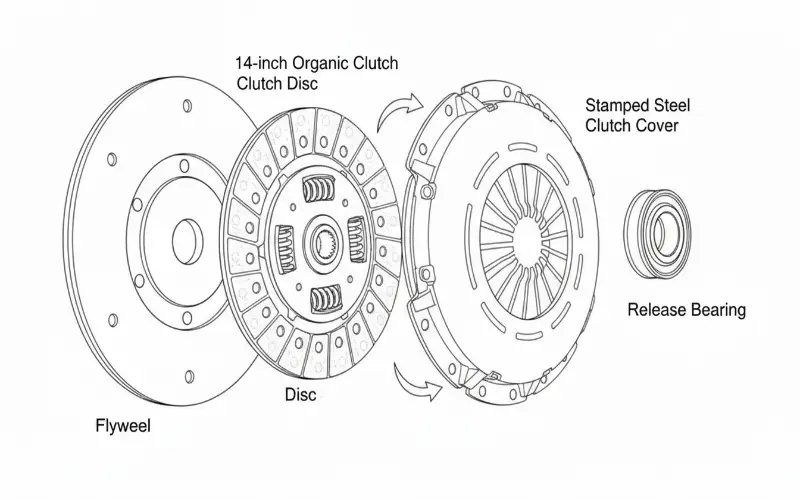
While less common in line-haul trucking, the single-disc clutch remains a staple in lighter applications.
Anatomy
Typically a 14-inch assembly featuring a stamped steel cover and a single organic or ceramic disc. It is lighter and has fewer moving parts.
Pros & Cons
- Pros: Lower manufacturing cost, lighter weight (less rotational inertia means quicker shifting), and simpler installation.
- Cons: Limited torque handling (usually capped at 850-900 ft-lbs). With less thermal mass, it is prone to rapid heat fade on steep grades or heavy starts.
“Ideal for medium-duty delivery trucks (Class 6), light agriculture, and empty container handlers where gross vehicle weight (GVW) is consistent and moderate.”
The Dual-Disc Clutch: The Heavy Hauler’s Standard
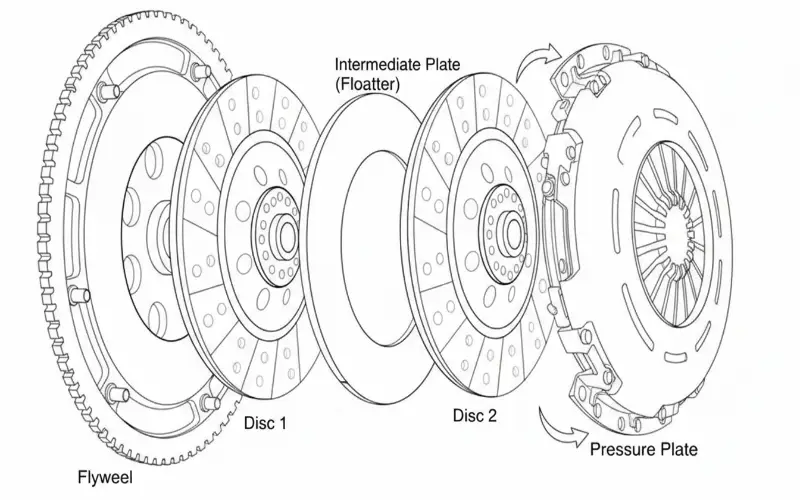
When you are hauling 80,000 lbs up a mountain, you need the Dual-Disc system.
Anatomy of a Powerhouse
The standard setup is a 15.5″ Cast Iron Cover containing two ceramic friction discs and a central intermediate plate. This creates four friction surfaces instead of two.
Pros: Why it Rules the Road
- Massive Torque: Easily handles 2,050+ ft-lbs, accommodating the most powerful Cummins or Detroit Diesel engines.
- Heat Dissipation: The intermediate plate acts as a massive heat sink. During the “slip zone” of starting a heavy load, it absorbs thermal energy that would otherwise warp a single flywheel surface.
- Longevity: In standard line-haul applications, a well-maintained dual-disc clutch can last 500,000 to 1,000,000 miles.
Cons: The Trade-offs
They are heavy. This added weight increases rotational inertia, slowing down synchronization during shifts (though less relevant with modern AMT transmissions). They are also notorious for “Floater Plate Rattle”—a clattering noise at idle when the clutch is disengaged.
The Critical Component: The Intermediate Plate (Floater)
For B2B distributors, the intermediate plate is often the failure point in cheap aftermarket kits. Its drive mechanism defines the quality of the clutch.
Drive Types: Lug vs. Pin/Strap
The plate has “ears” (lugs) that fit into slots in the flywheel adapter. Problem: Over time, the lugs hammer against the slots, causing severe wear, jamming, and excessive noise.
The plate is driven by hardened steel pins or flexible straps connected to the cover. Benefit: Reduces rattle, eliminates flywheel housing wear, and ensures smoother release.
Heat Resistance
The thickness of the intermediate plate matters. Cheap kits use thinner plates to save weight and cost. Kukauto uses heavy-gauge cast iron to ensure the plate does not warp under the extreme heat of a hill start.
Failure Mode Analysis: Why Dual-Disc Clutches Fail
Even the robust dual-disc system has weak points. Understanding these helps in diagnosis and prevention.
1. Intermediate Plate Hang-Up
If the drive pins or lugs wear excessively, the intermediate plate can get stuck. This causes the clutch to drag (fail to disengage), leading to gear grinding.
2. Heat Checking (Blue Spots)
Caused by excessive slipping (riding the pedal). The intermediate plate overheats and develops surface cracks. These cracks act like a cheese grater, shredding the friction material.
3. Clutch Brake Failure
On non-synchronized transmissions, the clutch brake stops the input shaft. If the driver presses the pedal to the floor while the truck is moving (instead of only at a stop), the clutch brake will shear off instantly.
Comparative Analysis: Decision Matrix for Fleets
| Criteria | Single-Disc | Dual-Disc |
|---|---|---|
| Cost Analysis | Low Upfront Cost. | Higher Upfront, Lower Cost-Per-Mile. |
| Torque Capacity | < 900 ft-lbs | > 2,050 ft-lbs |
| Drivability | Smooth, organic feel. Forgiving. | Aggressive “Grab” (Ceramic). Requires driver skill. |
| Installation | Simple alignment. | Challenging. aligning two discs splines perfectly is critical. |
Step-by-Step Installation Guide: The Alignment Challenge
Installing a dual-disc clutch is significantly more complex than a single-disc. The spline alignment must be perfect.
- Preparation: Inspect the flywheel. It must be resurfaced or replaced. A warped flywheel will ruin a new dual-disc kit in miles.
- Disc 1 Installation: Place the first disc (damper springs facing away from flywheel) and insert the alignment tool.
- Intermediate Plate: Slide the intermediate plate over the alignment tool. Ensure the drive pins/straps align with the flywheel slots or adapter ring.
- Disc 2 Installation: Place the second disc. Crucial: Ensure the splines of Disc 1 and Disc 2 are perfectly aligned using the tool. If they are off by 1mm, the transmission shaft will not enter.
- Torque Sequence: Install the cover assembly. Tighten bolts in a star pattern to specs (usually 40-50 ft-lbs). Remove the alignment tool only after torquing.
Pro Tip: Never let the transmission hang on the clutch discs during installation. This will bend the hubs.
Maintenance & Adjustment Protocols
Manual Adjust (Easy Pedal)
Requires checking pedal free-play (1.5 – 2 inches) every 10,000 miles. As the discs wear, the release bearing moves closer to the transmission. Use the internal adjusting ring to restore the gap.
Self-Adjusting (Solo)
Features a cam-and-worm gear mechanism that senses wear and adjusts automatically. Warning: Never manually adjust a self-adjusting clutch unless resetting it for installation. Doing so can break the internal mechanism.
When to Upgrade? (Upselling Strategy)
Distributors can increase revenue by identifying when a customer needs to move from Single to Dual.
- Signs of Overwhelm: If a customer reports slipping under load or you see “Blue Spots” (heat checking) on the flywheel of a single-disc setup, they are overloading the clutch.
- Engine Modifications: If a fleet tunes their ECU for more power (e.g., boosting a 350HP engine to 450HP), the stock single-disc clutch will fail immediately. An upgrade is mandatory.
Case Study: Solving Burnout in a Logging Fleet
The Problem: A logging company in British Columbia was burning through single-disc clutches on their Kenworth trucks every 6 months due to steep, muddy off-road grades and heavy timber loads.
The Solution: They upgraded to Kukauto’s 15.5″ Severe-Duty Dual-Disc Kit with 6-paddle ceramic buttons.
The Result: The new clutches have been running for 24 months without replacement. Maintenance costs dropped by 75%, and driver fatigue decreased due to the Easy-Pedal assist springs.
Kukauto’s Advantage in Dual-Disc Manufacturing
Dynamic Balancing as a Unit
Many manufacturers balance components individually. Kukauto balances the entire assembly (Cover + Pressure Plate + Intermediate Plate) together. This eliminates stack-up tolerance vibration, protecting the transmission input shaft seals.
Self-Adjusting vs. Manual Adjust
We offer both. Our Self-Adjusting models (comparable to Eaton Solo) reduce maintenance by automatically compensating for wear. Our Manual Adjust models (comparable to Easy Pedal) offer simplicity and reliability for veteran mechanics who prefer total control.
Ceramic Button Quality
We use premium US-grade friction formulas for our ceramic buttons, ensuring they resist crumbling even under the high shock loads of off-road logging or construction.
FAQ: Technical & Sourcing
Conclusion
The choice between Single and Dual-Disc is rarely a preference—it is a requirement dictated by torque. For heavy-duty fleets, the Dual-Disc clutch is the only viable option for longevity and performance. By choosing Kukauto’s Strap-Drive Dual-Disc kits, distributors can offer their clients a smoother, quieter, and longer-lasting solution.
Equip Your Fleet with Heavy Duty Strength
Download our 2026 Heavy Duty Clutch Catalog featuring our complete range of 15.5″ Dual-Disc models, including Self-Adjusting and Manual options.