Forget the sample. The real decision in ceramic vs organic mining clutch material comes down to thermal survival. Organic discs rely on a resin binder that degrades above 400°C — a temperature every 150‑ton loaded rig hits on a long uphill pull. Ceramic discs, built with copper‑infiltrated pads, remain stable to 650°C and last 2.5× longer. The FOB pricing on a ceramic disc runs about 40% higher upfront, but over a 4,500‑hour lifecycle that drops your cost‑per‑hour from $2.11 to $0.92 compared to the organic unit that’s done at 1,800 hours. The difference isn’t a better sample. It’s a different material, matched to the duty cycle.

The 3 Materials That Rule Mining Clutch Discs
Material choice determines whether a clutch fails at 1,800 hours or survives 4,500 hours under 650°C loads.
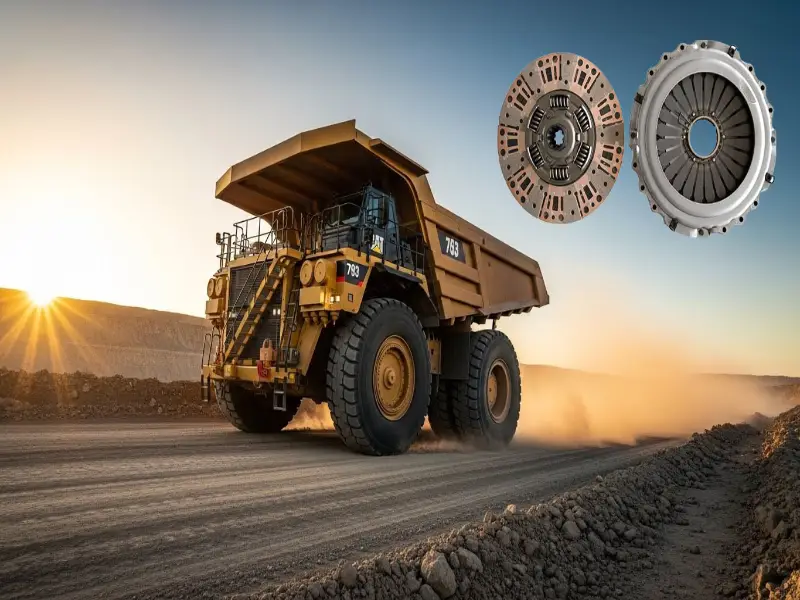
At a copper mine in Chile, a maintenance manager stares at a clutch disc pulled from a 793 haul truck. 1,700 operating hours on the clock—the organic facing glazed hard from repeated stops on a 12% grade. The binder had broken down under sustained heat, leaving the disc useless 500 hours before its scheduled change. That failure is not a defect; it’s a material mismatch. For mining truck clutch disc material selection, there are three distinct friction compounds. Each behaves differently under 150‑ton gross vehicle weight, and getting this choice wrong costs $3,000 in labor before you even pay for the replacement part.
- Organic (non‑asbestos): The stock option that ships on many OEM clutches. Organic discs use a resin‑bonded fiber matrix that provides smooth, progressive engagement—easy on U‑joints and operator-friendly. But they fail at 400°C and glaze permanently at 480°C. In frequent stop‑start mining cycles, where the clutch is slipping under 150‑ton loads, surface temperatures routinely exceed these limits. The resin binder breaks down, friction coefficient drops, and the disc work‑hardens. Life span averages 1,800 hours in moderate duty. Use organic only on light‑duty service trucks or mixed fleets with varied operators where driveline shock is the bigger risk.
- Ceramic (copper‑infiltrated): Ceramic discs are built with sintered iron‑copper buttons that withstand sustained 650°C surface temperature. The copper infiltration adds thermal conductivity, pulling heat away from the friction face faster. This is the material that achieves the 2.5× wear life advantage—4,500 hours vs. 1,800 hours in real‑world stop‑start mining cycles. The catch: ceramic grabs hard. Without a progressive damper hub, that abrupt engagement sends a torque spike straight through the driveline and snaps universal joints. Any OEM mining clutch disc alternatives using ceramic must include a damper disc engineered to absorb those peaks. Ceramic also carries a 40% cost premium on the part, but the cost‑per‑hour drops from $2.11 to $0.92 because you skip one full labor change‑out. It’s the only rational choice for long‑haul uphill routes with few stops and heavy sustained torque.
- Semi‑metallic: The middle ground that’s gaining real traction in wet, muddy open‑pit operations. Semi‑metallic pads blend organic fibers with metallic particles—typically 30% copper content—to create a surface that clears debris from the flywheel face. This prevents the scoring that pure ceramic can cause in humid environments where mud and grit get packed into the bell housing. Heat tolerance sits between organic and ceramic: it won’t handle 650°C indefinitely, but it resists the sudden fade events that kill organic discs on haul roads. For sites where the truck sees both high‑torque pulls and frequent immersion in water and slurry, semi‑metallic is the pragmatic choice. It keeps the flywheel surface intact and reduces unplanned downtime from hard‑to‑diagnose chatter or slip caused by debris contamination.
The real differentiator isn’t just temperature—it’s how each material interacts with the entire driveline and the mine’s specific moisture profile. Ceramic wins on heat and life, but a miner in Appalachia with constant rain will have flywheel scoring unless the disc’s formulation accounts for debris clearing. A maintenance manager in Arizona hauling dry ore uphill with no mud can run ceramic and ignore organic altogether. That context is the final 10% that separates professionals from amateurs when evaluating clutch disc material options.
| Material | Heat Tolerance & Failure Point | Average Service Life & Unit Cost | Cost Per Hour & Key Limitation |
|---|---|---|---|
| Organic (Non‑asbestos) | Fades above 400°C; glazes at 480°C | ~1,800 hours / ~$800 | $2.11/hour. Resin binder breaks down under sustained 150‑ton loads. |
| Ceramic (Copper‑infiltrated) | Stable to 650°C sustained | ~4,500 hours / ~$1,120 | $0.92/hour. Abrupt engagement; mandatory use with a progressive damper disc. |
| Semi‑metallic (30% Copper) | Mid‑range thermal stability (engineered blend) | Application‑dependent (longer than organic in mud) | Prevents flywheel scoring in humid, muddy mines by clearing debris. |
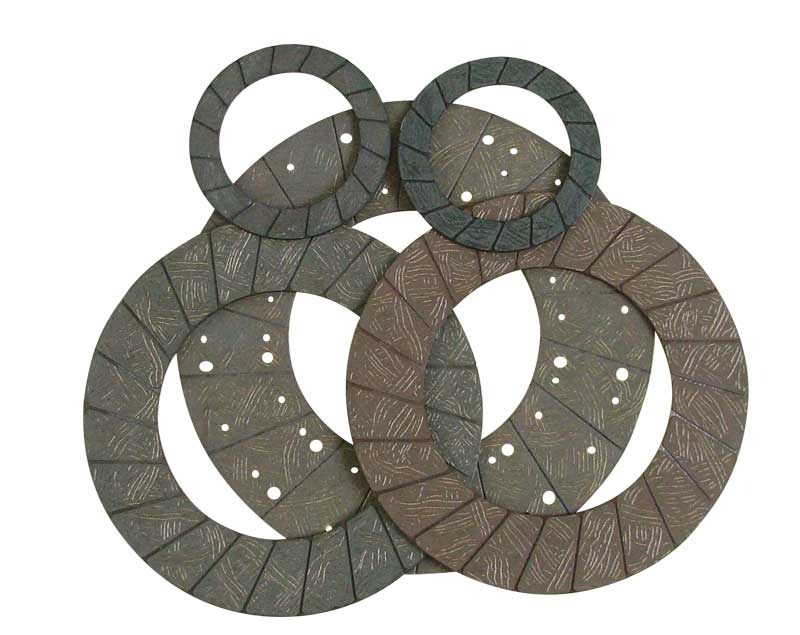
Thermal Performance: Who Survives a 600°C Haul Cycle?
Resin binder breaks down at 400°C.
No haul truck driver lifts off the throttle on a 12% grade with 150 tonnes behind them. The clutch is either engaged, slipping under load, or cooking inside the bell housing. The question isn’t whether heat builds up — it’s whether the friction material can hold torque once surface temperatures cross 400°C. Organic discs cannot. The phenolic resin that bonds the fiber matrix begins thermal decomposition at that threshold. By 480°C, the surface glazes. A glazed disc loses bite instantly. Pedal effort goes soft, slip increases, and the truck rolls backward on a ramp it should have climbed.
Glazing isn’t gradual. One overheated engagement event is enough to transform the friction surface into a hard, glass-like layer that no longer sheds heat properly. The disc is done. The maintenance team might nurse it through another shift, but the torque capacity is compromised and the flywheel starts absorbing heat instead of dissipating it. On a $3,000 labor change-out, running a glazed disc for ‘one more cycle’ is false economy.
Ceramic button discs — specifically copper-infiltrated sintered ceramic — operate differently. There is no resin to decompose. The friction material is fused under heat and pressure into a metallic-ceramic matrix that maintains its coefficient of friction through sustained 650°C surface temperatures. Internal dyno testing on mining-spec discs shows friction coefficient variation under 8% across the 300°C to 650°C band. Organic compounds start deviating at 350°C and fall off a cliff at 420°C.
The trade-off is flywheel wear. The same hardness that gives ceramic its thermal stability becomes a liability in wet, abrasive environments. Underground and pit mines generate mud slurry that works into the bell housing. Ceramic buttons trap this grit against the flywheel face, scoring it with each engagement. This is where semi-metallic formulations with 30% copper content earn their place. The softer copper matrix embeds debris particles rather than grinding them into the iron. For a fleet operating in constant humidity, the best friction material for 600°C mining clutch applications may not be pure ceramic — it’s a hybrid that sacrifices 50°C of peak thermal capacity for flywheel preservation.
Here is the benchmark to use on your next supplier call: request the friction coefficient curve against temperature, not just a maximum rated temperature. A disc rated to 650°C that loses 30% of its grip by 550°C is no better than an organic disc at the failure point. The curve should stay within 10% deviation from 250°C through the rated maximum. If the supplier cannot produce these test sheets, the rating means nothing.

Engagement Feel and Driveline Shock
Ceramic engagement snaps U-joints unless you spec a progressive damper disc.
Organic friction material engages progressively. The resin-bonded fibre slips slightly as it grabs, smoothing torque transfer into the gearbox and driveline. On a 150‑ton loaded haul truck, that slip window is what keeps universal joints and differential pinions alive. There is no shock load spike—torque rises over 0.4 to 0.6 seconds, well within the elastic limit of the driveline components.
Ceramic doesn’t slip. Copper‑infiltrated sintered buttons bite the moment the pressure plate clamps. Clutch engagement completes in under 0.15 seconds. The instantaneous torque spike—often 2.5× to 3× rated engine torque—hits the U‑joints like a hammer. Fleets have been known to destroy a cross‑and‑bearing assembly in 200 operating hours because they ran a straight‑hub ceramic disc without a damper. The failure is never the clutch. It is always the U‑joint yoke ear broken clean off.
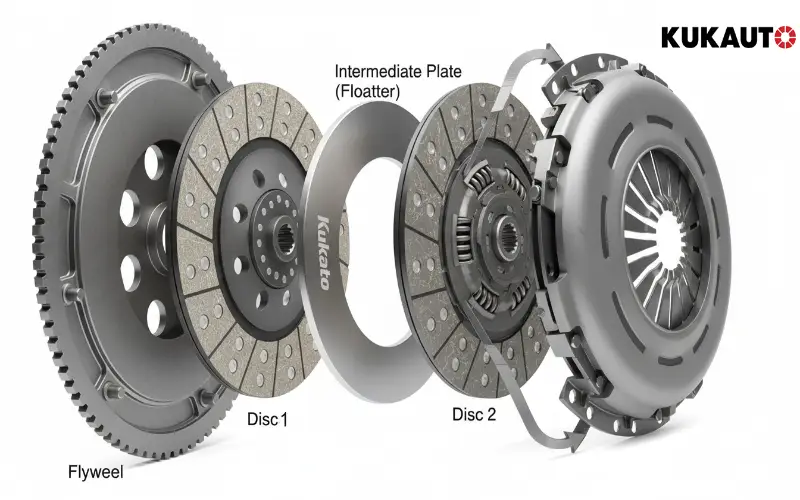
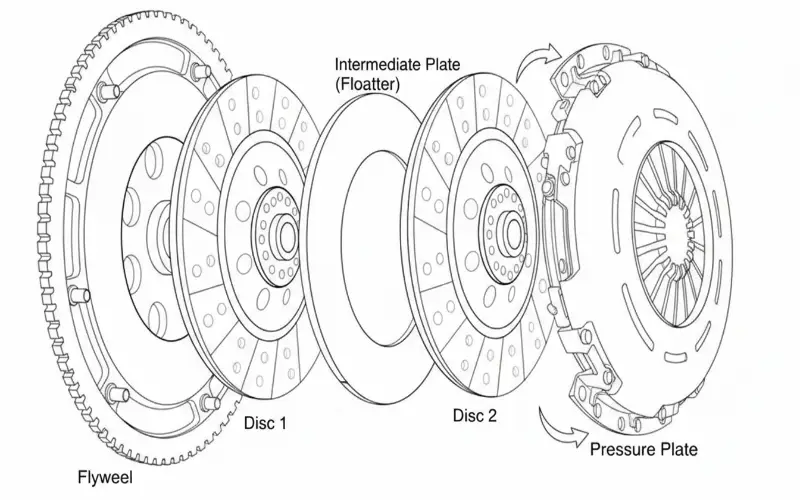
A progressive damper disc absorbs that spike. It houses a series of coil springs arranged in a two‑stage or three‑stage layout inside the hub. The first stage compresses under light load, cushioning tip‑in; the second and third stages absorb peak torque before it reaches the input shaft. The result is engagement that hits the U‑joints the way an organic disc would, while still transferring the full clamp load of a ceramic button facing.
- Spring staging: Two‑stage springs (soft initial + stiff secondary) stretch the torque rise to 0.4‑0.6 seconds, mimicking organic progression. Single‑stage springs leave a torque gap that still shocks the driveline.
- Hub window clearance: Tight‑window hubs limit spring travel and bottom out early. A wide‑window hub with 10‑12 mm of cumulative travel prevents coil bind at peak torque.
- Warranty coverage: Standard organic kits run on 2‑year/2,000‑hour warranties. The same warranty applies to ceramic kits only if they include a progressive damper hub. Without it, U‑joint failure voids driveline claims.
One more detail missed in most spec sheets: humidity. In pit operations where mud packs into the bellhousing, a ceramic disc without debris‑clearing channels will grind that grit into the flywheel face. Semi‑metallic pads with 30% copper content clear debris and prevent scoring. If your site runs in wet muck, pair the ceramic disc with a semi‑metallic pressure plate side and keep the progressive damper on the hub. That’s the configuration that hits 4,500‑hour life without taking out the U‑joints or the flywheel.

Wear Life and Cost per Hour
Ceramic cuts cost-per-hour from $2.11 to $0.92—a 56% reduction.
A fleet manager I know ordered 50 organic clutch kits for his Caterpillar 785 haul trucks. The pre-production sample passed every bench test. He signed off on the shipment. Seven months later, his maintenance logs told a different story: the discs had glazed after 900 hours—half the expected life. That $800 unit price suddenly looked like a bad deal. When you add the $3,000 labor per truck for the emergency change-out, his actual cost per hour wasn’t the budgeted $0.44. It was an ugly $2.11.

Real-world accelerated wear testing under simulated 150-ton stop-start cycles confirms a blunt truth: ceramic button discs outlast organic by a factor of 2.5. Organic discs fail when sustained heat above 400°C breaks down the resin binder, a routine condition on long uphill hauls. Ceramic friction material, infiltrated with copper, stays stable to 650°C and delivers 4,500 operating hours versus organic’s 1,800. That gap isn’t marginal—it’s the difference between one change-out per year and two mid-season emergencies.
- Organic (1,800 h): Disc: ~$800. Labor: $3,000. Total cost per cycle: $3,800. Cost per hour: $2.11.
- Ceramic (4,500 h): Disc: ~$1,120. Labor: $3,000. Total cost per cycle: $4,120. Cost per hour: $0.92.
The math is simple, but the trap is the 40% upfront premium. Buyers who look only at invoice price miss the cost-per-hour metric entirely. However, ceramic’s wear life advantage only holds if the installation includes a progressive damper disc. Without it, the abrupt engagement sends shock through the U-joints, cracking them prematurely and eating up any labor savings. Always request supplier certification that the kit includes the damper hub rated for your torque band—skip this and you’ll see the $0.92 figure slip.
| Metric | Organic (Non-Asbestos) | Ceramic (Copper-Infiltrated) | Delta / Advantage |
|---|---|---|---|
| Friction Material | Organic (Non-Asbestos) | Ceramic (Copper-Infiltrated) | Delta / Advantage |
| Average Unit Price (Disc Only) | ~$800 | ~$1,120 | 40% Premium for Ceramic |
| Real-World Cycle Life (Stop-Start Hauling) | 1,800 Hours | 4,500 Hours | 2.5× Longer Lifespan |
| Cost Per Hour (Parts Only) | $0.44 | $0.25 | 43% Lower Parts Cost/Hour |
| Labor Cost per Change-Out | $3,000 (Fixed) | $3,000 (Fixed) | Fewer Change-Outs Required |
| Total Cost Per Operating Hour (Parts + Labor) | $2.11 | $0.92 | 56% Reduction in Total Cost/Hour |
When to Choose Each Material
Match the material to the duty cycle, not the parts catalog.
No single friction material covers every haul profile. The call depends on heat load, operator variability, and site conditions. Getting it wrong means either premature failure or driveline damage—both hit the same budget line.
- Long-haul uphill, few stops: Ceramic. Sustained 600°C+ surface temps break down organic resin binders fast. Ceramic holds to 650°C and delivers 2.5× the life, cutting cost per hour from $2.11 to $0.92. Mandatory: progressive damper hub to protect U-joints from ceramic’s hard engagement.
- Mixed fleet, varied operators: Organic. Forgiving engagement reduces driveline shock from inexperienced drivers. Use only when average loads and grades stay below the 400°C threshold. Above that, ceramic with a damper disc is the only option that avoids frequent $3,000 change-outs.
- Wet or muddy sites: Semi-metallic. Ceramic’s hard surface can trap debris and score flywheels in high-humidity environments. Pads with 30% copper content clear contamination better and prevent scoring, while still handling moderate heat cycles better than organic.
| Operating Condition | Recommended Material | Cost per Hour | Key Benefit | Critical Requirement |
|---|---|---|---|---|
| Long-haul uphill with few stops, sustained temps >400°C | Ceramic (copper-infiltrated) | $0.92 | Stable to 650°C; 2.5× longer life (4,500 h vs 1,800 h) | Must pair with progressive damper disc to avoid U-joint shock |
| Mixed fleet with varied operators or frequent stop-start | Organic (non-asbestos) | $2.11 | Forgiving engagement protects driveline; low upfront cost (~$800) | Replace before 400°C fade point to prevent glaze |
| Wet, muddy, or high-humidity mine roads | Semi-metallic (30% copper) | ~$1.50 (estimated) | Clears debris to prevent flywheel scoring; decent heat tolerance | Verify copper content for optimal debris shedding without excess wear |
| Stop-start cycles with 150-ton loads on steep grades | Ceramic | $0.92 | Resists resin breakdown; consistent grip under extreme thermal load | Monitor flywheel condition in humid conditions; damper hub required |
| Light-duty, low-heat (<350°C) runs with budget focus | Organic | $2.11 | Lowest upfront cost; smooth engagement for driver comfort | Not for sustained high heat; schedule inspections every 1,500 h |
Conclusion
Does your sample approval protocol include a sustained 650°C fade test to confirm the disc won’t glaze under a 150‑ton load?
Is the hub equipped with a progressive damper, and can you guarantee ceramic button flatness within a 0.05 mm quality tolerance to avoid flywheel scoring?
Can you present a cost‑per‑hour analysis that combines the ceramic disc’s FOB pricing with the $3,000 labor change, proving a lower total cost than organic?
Explore the Mining Truck Clutch Solutions page to compare ceramic, organic, and semi‑metallic kits engineered for 650°C haul cycles. That’s where you’ll find full specs, warranty details, and the option to request a bulk quote.
Frequently Asked Questions
What is the difference between organic and ceramic clutch discs for mining trucks?
Organic discs use resin-bonded fiber for smooth engagement but fade above 400°C; ceramic discs use copper-infiltrated friction for high-heat grip but can be harsh on driveline components. Choose ceramic when. Match material to your heat load and operator skill, not just price.
Which clutch material is best for a mixed fleet of mining haul trucks?
Organic is the safer default for mixed fleets with varied operators because its progressive engagement forgives inconsistent driving and reduces U-joint shock. Ceramic only wins if every driver follows strict. Start with organic and switch only after telemetry proves sustained heat abuse.
How much does a ceramic clutch disc cost compared to organic?
Ceramic discs typically run 30-50% higher upfront than equivalent organic discs, but their 2-3× longer service life in high-heat cycles can reduce cost per hour if you track total replacement labor. Always calculate cost per hour, not just per disc.
Can ceramic clutch discs cause flywheel damage in mining trucks?
Yes, ceramic friction can score flywheels if the hub damper is rigid and engagement is consistently harsh. Progressive dampers and correct release bearing adjustment dramatically reduce flywheel wear. Protect the flywheel with a damper disc, not just material choice.
How many hours should a mining truck clutch disc last?
In heavy mine haul cycles, an organic disc might last 1,800–2,500 hours, while ceramic can reach 4,500 hours under ideal conditions. Real-world life depends entirely on heat load, operator behavior, and maintenance. Track your fleet’s failure hours and adjust material spec accordingly.