Introduction: The Global Clutch Market Divide in 2026
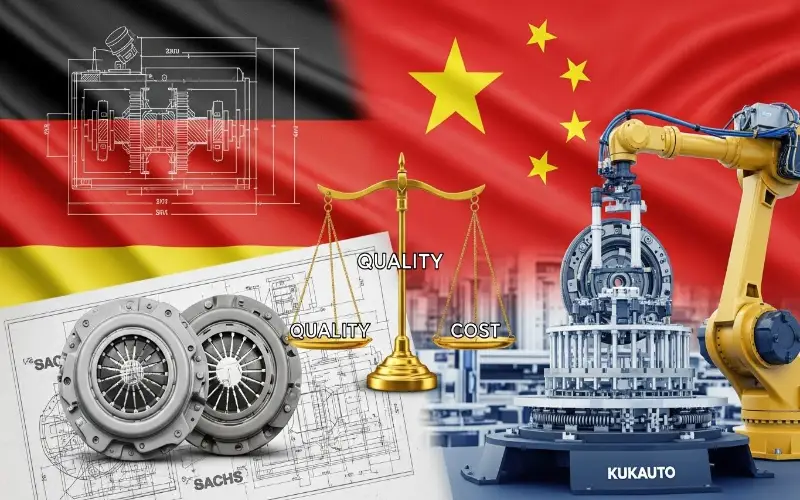
For decades, the automotive supply chain has operated on a simple, binary assumption: if you want uncompromised quality, you buy German; if you want low cost, you buy Chinese. In 2026, this view is not only outdated—it is costing your business significant profit margins.
The Legacy of German Engineering
Germany remains the spiritual home of automotive engineering. Titans like ZF (Sachs) and Schaeffler (LuK) have set the global benchmarks for material science, NVH (Noise, Vibration, Harshness) control, and transmission innovation for over a century. Their reputation is built on microscopic tolerances and proprietary metallurgy that defined the internal combustion era.
The Rise of Chinese Precision Manufacturing
However, the last decade has seen a seismic shift. Top-tier Chinese manufacturers have moved beyond “reverse engineering” to “process innovation.” Driven by the demands of domestic EV giants and global export standards, leading factories have adopted German automation technologies (Industry 4.0). By implementing rigorous quality standards like IATF 16949 and investing in automated heat treatment lines, factories in China are now producing heavy-duty and passenger car components that rival their European counterparts in durability, but at a fraction of the production cost.
The Profitability Equation
For B2B buyers, wholesalers, and private label owners, the question is no longer “Is Chinese quality good enough?” The data proves it is. The real question is: “Which origin allows me to compete on price while maintaining my brand’s reputation for reliability?”
The “German Standard”: Pros, Cons, and Market Positioning
German manufacturing is synonymous with perfection. But in a commercial market driven by tightening margins and inflation, perfection comes at a steep price.
The Pros: Unmatched Material Science
German factories excel in metallurgy. Their steel consistency (often sourcing specific alloys like 50CrV4 for diaphragm springs) and proprietary friction material formulas are unmatched. For high-end luxury vehicles (Porsche, BMW, Mercedes-Benz) where performance tolerances are microscopic and drivers demand zero vibration, German OEM parts are often the only viable choice.
The Cons: Prohibitive Costs and Rigid Terms
The downside is significant. German labor and energy costs are among the highest in the world, leading to high unit costs (FOB prices). Furthermore, major German suppliers often impose:
- Rigid MOQs: High minimum order quantities that tie up distributor capital.
- Long Lead Times: Production queues can stretch for months due to global demand and raw material shortages in Europe.
- Lower Margins: High buy-in costs leave little room for distributor markup, squeezing profitability.
The “Chinese Evolution”: From “Budget” to “World-Class”
The “Made in China” label has evolved. In the heavy-duty and aftermarket sectors, China has become the center of gravity for global production quality and efficiency.
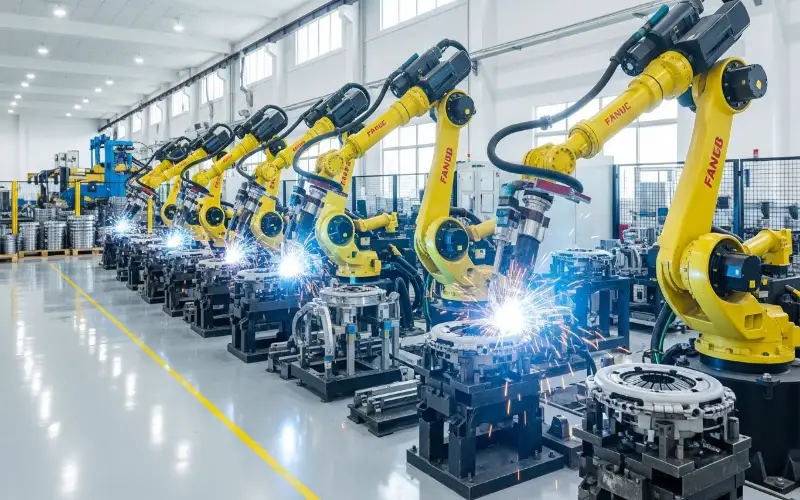
Technology Shift: Automation and CNC
Leading Chinese factories have replaced manual labor with robotic assembly lines. CNC machining ensures that clutch covers are balanced to the same G6.3 dynamic balance standard used in Europe. This automation eliminates the “human error” that used to plague Chinese manufacturing in the early 2000s.
The “Premium Aftermarket” Factory
Not all Chinese factories are the same. A new tier of manufacturers, such as Kukauto, has emerged. These “Premium Aftermarket” factories bridge the gap. They use imported raw materials (like Belgian steel or US friction facings) but assemble them in China. This hybrid approach offers a product that performs at 95-100% of the German standard for 60% of the cost.
Head-to-Head Comparison: Germany vs. China (Critical Data)
Let’s look at the critical data that affects your bottom line.
| Feature | German Manufacturers (Tier 1) | Chinese Top-Tier (e.g., Kukauto) |
|---|---|---|
| Steel Grade (Springs) | Premium Alloy (51CrV4 / 50CrV4) | Intl. Standard (65Mn / 55CrSi / 50CrV4) |
| Friction Material | Proprietary (Self-Manufactured) | Global Sourcing (Raybestos / Valeo / Domestic Premium) |
| Unit Cost (Index) | 100 (Baseline High) | 40 – 60 (Significant Savings) |
| Distributor Margin | Low (15-20%) | High (30-50%) |
| MOQ Flexibility | Rigid (High Volume) | Flexible (Low Volume / Mixed Container) |
| Lead Time | 90 – 120 Days | 30 – 45 Days |
| Quality Standard | IATF 16949 / VDA 6.1 | IATF 16949 / ISO 9001 |
Technical Deep Dive: The Science Behind the Savings
Many buyers assume that lower cost means lower technical specifications. In the case of top-tier Chinese manufacturing, the savings come from efficiency, not material deficiency. Let’s analyze the core engineering differences.
1. Steel Fatigue Life: 50CrV4 vs. 65Mn
The diaphragm spring is the heart of the clutch.
German Standard: Uses 51CrV4 (Chrome Vanadium) steel. This premium alloy offers exceptional fatigue resistance, often exceeding 2 million actuation cycles. Ideally suited for high-performance racing where heat cycling is extreme.
Chinese Standard: Often uses 65Mn (Manganese) or 55CrSi (Chrome Silicon). 55CrSi is the industry standard for 90% of passenger cars and heavy-duty trucks. While its theoretical fatigue life might be 1.5 million cycles (vs. 2 million), this far exceeds the typical lifespan of the friction material itself.
The Verdict: Unless you are building a Formula 1 car, the premium for German steel often yields diminishing returns for standard fleet operations.
2. Dynamic Balancing: The G6.3 Standard
Vibration kills transmissions. The ISO 1940-1 standard defines balance grades.
German factories consistently hit G2.5 (ultra-precision). However, for automotive drivetrains, the requirement is typically G6.3. Leading Chinese factories like Kukauto use automated drilling balancing machines to guarantee G6.3 compliance. This ensures that at highway speeds (100km/h+), there is no perceptible difference in vibration between a Sachs clutch and a Kukauto clutch.
3. NVH (Noise, Vibration, Harshness) Control
This is where German engineering historically led. However, Chinese factories have closed the gap by adopting multi-stage pre-damper technology. By using high-quality hysteresis friction washers and precision-calibrated springs, premium Chinese clutches can now effectively filter out engine idle rattle and gear noise, providing a driving experience indistinguishable from OEM.
The Economics of Manufacturing: Where Do the Savings Come From?
If the technology is similar, why is the price difference so drastic? It is crucial for buyers to understand that “cheaper” does not mean “worse.” It means “more efficient.” Here is a breakdown of the cost structure for a standard heavy-duty clutch kit (FOB Price: $100 Reference).
Cost Structure Analysis: Germany vs. China
Analysis: As you can see, the raw material investment is comparable. The massive savings for Chinese manufacturers come from Labor and Energy costs. When you buy German, nearly 40% of your money pays for expensive European labor. When you buy from Kukauto, that money goes into the product itself.
Industry Insight: The “Hidden” Supply Chain Reality
🔍 The Secret Global Brands Don’t Tell You
The “German” Brand, Made in China: It is an open secret in the industry that many famous European and American clutch brands outsource their production to top-tier Chinese factories. They ship these parts to Hamburg or Detroit, package them in premium branded boxes, and sell them at a “German” price point. This confirms one crucial fact: Chinese manufacturing capability has already met the German standard. The only difference is the label on the box and the profit margin—which currently goes to them, not you.
How to Identify Chinese Factories That Meet German Standards
Finding a Chinese supplier is easy; finding one that rivals ZF or Sachs requires a technical eye. Do not rely solely on Alibaba trade assurance. Here is your technical checklist for vetting a “German-Standard” Chinese factory:

1. Check the Heat Treatment Equipment (The Heart of the Clutch)
The diaphragm spring is the most critical component. Its tempering determines the clutch’s lifespan.
The Standard: Look for factories using Aichelin (Austrian brand) or Ipsen (German brand) heat treatment furnaces. These systems ensure precise carbon potential control, preventing springs from cracking or losing tension.
Red Flag: If they use generic, open-air salt bath furnaces, the quality will be inconsistent.
2. Verify Dynamic Balancing Standards
German clutches are famous for smooth operation. This comes from balancing.
The Standard: Ask if they balance their cover assemblies to G6.3 grade (ISO 1940-1). Top factories like Kukauto use automatic drilling balancing machines that correct imbalance to within grams.
3. Look for “VDA 6.3” Awareness
While IATF 16949 is common, VDA 6.3 is the German automotive industry’s specific process audit standard. Even if a Chinese factory isn’t fully VDA certified, asking if they are familiar with VDA 6.3 audit protocols will reveal if they supply to German Tier-1 clients.
Real-World Case Studies: Sourcing Decisions in Action
Case Study A: The “Brand Purist” (European OEM)
Scenario: A luxury European truck manufacturer needed a clutch for their flagship model.
Decision: They chose a German Supplier (Sachs).
Why: The cost was not a factor. They needed the “Made in Germany” pedigree to justify the truck’s premium price tag to their customers. They also required joint R&D capabilities to co-develop the transmission system.
Case Study B: The “Profit Maximizer” (US Aftermarket Distributor)
Scenario: A large auto parts distributor in Texas was selling a famous American brand clutch but facing margin compression due to price wars. Their gross margin was slipping below 18%.
Decision: They switched their “Gold Line” private label to Kukauto (China).
Result: By sourcing directly from the factory in Shandong, they reduced their landed cost by 45%. They maintained a warranty claim rate of less than 0.8% (industry standard), but their gross margin jumped to 42%. This allowed them to undercut competitors while making more profit per unit.
Decision Guide: Which Origin Fits Your Business Model?
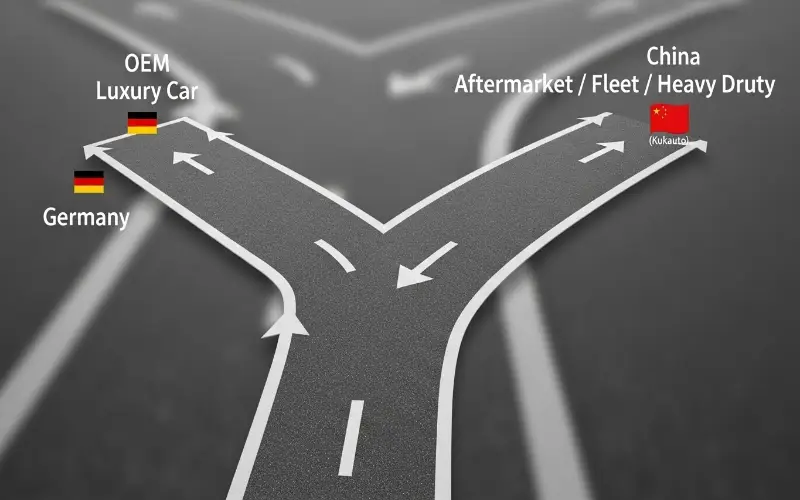
Scenario A: Sourcing for High-End European OEMs
Verdict: Go Germany. If you are supplying the assembly line for a new BMW 7-Series or a Porsche, you need the specific brand heritage, R&D partnership, and zero-tolerance specs that only a ZF or Schaeffler can provide. The cost is secondary to the pedigree.
Scenario B: Commercial Fleets, Aftermarket Distribution, and Mining
Verdict: Go China (Kukauto). For heavy-duty trucks, excavators, and aftermarket repairs, durability and ROI are king. A Chinese premium clutch from Kukauto will last just as long in a Scania truck as a European one, but the cost savings will significantly boost fleet profitability and distributor margins.
Scenario C: Launching Your Own Private Label
Verdict: Go China. German factories rarely support private labeling for small-to-medium enterprises; they want to sell their brand. Chinese manufacturers are built for this model—offering custom branding, packaging design, and laser marking to help you build your brand equity, not theirs.
Why Kukauto Offers the “German Standard” at “Chinese Prices”
Kukauto represents the “Smart Choice” for the modern buyer. We don’t sell “cheap” parts; we sell “high-value” engineering.
- 15 Years of OEM Experience: Our engineering DNA is rooted in heavy industry. We understand torque loads and heat dissipation.
- Rigorous Quality Control: We utilize 3-Million Cycle Fatigue Testing machines and dynamic balance equipment akin to European standards. Our defect rate is less than 1% (PPM).
- Global Success: We actively serve distributors in North America, Europe, and the Middle East who have switched from major brands to Kukauto, improving their profit margins by an average of 35%.
FAQ: Addressing Concerns About Switching Suppliers
Q: How do Chinese friction materials perform in extreme heat compared to German ones?
Q: What about Intellectual Property (IP) protection when manufacturing in China?
Q: Are there tariffs or anti-dumping duties I need to be aware of?
Q: Can I develop a custom heavy-duty clutch that doesn’t exist in your catalog?
Conclusion: The Future is Global
Final Verdict: It’s About ROI, Not Just Geography
The debate between Germany and China is no longer about “Good vs. Bad.” It is about “Premium Cost vs. Smart Value.” For the vast majority of the global aftermarket and heavy-duty sector, paying the German premium no longer yields a proportional return on investment.
The future of auto parts manufacturing is global collaboration. By choosing a partner like Kukauto, you get the best of both worlds: German-level quality control protocols combined with the unbeatable efficiency and flexibility of Chinese manufacturing.
Challenge Us with Your Specs
Don’t just take our word for it. Send us your technical drawings or OEM part numbers. We will provide a factory-direct quote that proves you can increase your margins without sacrificing quality.
GET A COMPETITIVE QUOTE »