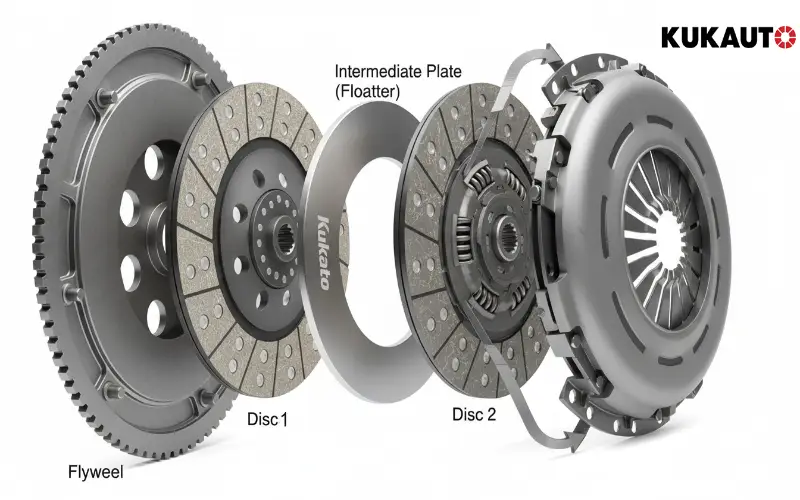

The gap between a pre‑production sample and a container load of wholesale tractor clutch kits is where margin evaporates for agricultural procurement. A $50,000 order for a Case IH fleet looked dead‑on at sample approval — friction material hardness checked out, torque capacity matched the data sheet, pedal effort felt right. Three months later, the production run arrived with an altered facing compound, and release bearings started pitting in dusty tilling conditions inside 200 hours. That buyer didn’t lose a shipment. He lost a planting window because quality tolerance wasn’t on the purchase order, and no one in the supply chain flagged the batch‑to‑batch drift.
A szakemberek nem árajánlatlap alapján szerzik be a forrást. Úgy olvassák a kereskedelmi feltételeket, mint egy motortérképet. Ez a cikk bemutatja azokat a számokat, amelyek elválasztják az ügyletet a holttehertől: a MOQ küszöbértékek, amelyek eltolódnak, ha szerszámokba fektet be, ártörések, amelyek kétfokozatú TLT tengelykapcsoló 250 dolláros egységtől 180 dolláros egységig 3000 készletnél, az átfutási idő realitásai, amelyek a Q4 slot-elosztást teszik az egyetlen legnagyobb haszonkulcstá, és a 20-30%-os alapterhelési csapda, amely eltűnik abban a pillanatban, amikor egy közvetlen vásárlásról tárgyal. A 40%-os költségcsökkentés és a 10%-os költségcsökkentés közötti különbség általában nem a szállító ára, hanem az, hogy a teljes készletet kérte-e.
Mit jelent valójában a MOQ a traktorok tengelykapcsolóinál?
Mold-amortized MOQs drop the threshold from 500 sets to 200 — but only if you pay tooling costs upfront.
You open the third pallet of a 500-unit tractor clutch order and something’s off. The friction material looks thinner than the pre-production sample approved six months ago. You grab calipers — yep, 0.3mm less facing thickness across the batch. That $50,000 order you placed based on sample approval is now a warranty time bomb sitting in your warehouse. This is what happens when you treat MOQ as just a number on a quote sheet instead of understanding what it actually represents.
MOQ isn’t a sales tactic. It’s a factory’s break-even calculation wrapped in a minimum commitment. For tractor clutches — whether single-stage dry clutches for 50-100 HP utility machines or dual-stage PTO units for 120+ HP row-crop tractors — the MOQ exists because setup costs are real. Die changes, line reconfiguration, and quality tolerance validation all cost the same whether you order 50 sets or 500. The factory needs volume to spread those fixed costs thin enough to hit a viable FOB price.
Standard MOQ for single-model tractor clutch kits lands between 300 and 500 sets. That covers the factory’s tooling amortization, line setup, and end-of-line dynamic testing across the batch. But most agricultural procurement managers don’t realize there’s a second path. When you pay mold costs upfront — roughly $3,000 to $8,000 per diameter, depending on the clutch cover stamping complexity — the math changes entirely. The factory no longer needs to recover tooling investment across your order volume. The MOQ drops to 200 sets per year for private-label exclusive designs.
-
-
- Standard MOQ Path: 300-500 készlet modellenként. A gyár amortizálja a szerszámokat a rendelés során. Alacsonyabb előzetes költség, nagyobb mennyiségi kötelezettségvállalás. Egységárak 500 készletnél: 85–120 USD 50–100 LE-s készletek esetén, 180–250 USD 120+ LE-s kétlépcsős készletek esetén.
- Formával amortizált MOQ útvonal: Évente minimum 200 készlet. Átmérőnként 3000-8000 dollárt kell előre fizetni a sajtolószerszámokért és az öntési mintákért. A gyár a szerszámokat az ügyfél tulajdonában lévőként kezeli. Az egységárak gyorsabban csökkennek alacsonyabb mennyiségeknél, mivel az egységenkénti teher nem viseli a szerszámköltséget. Ön is élvezheti a tervezési exkluzivitást – a versenytársak nem rendelhetnek ebből a formakészletből.
-
Here’s where the math gets interesting. On a standard 300-set order of dual-stage PTO clutches at $200 per unit, you’re at $60,000. If you instead pay $5,000 in mold costs and order 200 sets at $175 per unit — the mold-amortized rate — you’re at $40,000 total. That’s $20,000 in freed cash flow and 100 fewer units to warehouse. For an agricultural procurement manager running seasonal inventory, that’s the difference between cash tied up in a Kansas warehouse during January and cash available for spring planting demand.
Mixed-model container loading is the second lever most buyers never pull. A 20-foot container doesn’t care whether it’s carrying 300 units of one John Deere clutch model or 100 units each across three different models. If the factory holds tooling for multiple tractor brands — John Deere, Case IH, New Holland, Massey Ferguson — you can combine models to hit aggregate MOQ thresholds. One container, one bill of lading, one FOB origin. The catch: each model still needs to cover its own line setup cost if tooling isn’t already mounted. Most factories charge a $300-$500 line-change fee per additional model, which is negligible against the inventory diversification benefit.
-
- Single-Model Container: 300 units of one JD 6-series clutch. Simplest logistics, highest per-model inventory risk. Works when you have confirmed fleet homogeneity.
- Mixed-Model Container: 120 units JD + 100 units Case IH + 80 units New Holland. Hits 300-unit aggregate MOQ. Requires the factory to have live tooling for all models. Protects against single-model demand dips and lets you serve multiple dealer accounts from one shipment.
The cost of not understanding these two MOQ mechanics compounds fast. Stick to standard MOQ without exploring mold amortization, and you’re leaving 15-25% in per-unit savings on the table — every order cycle, every year. Ignore mixed-model loading, and you either overstock one model or run multiple smaller orders with higher freight costs per unit. A procurement manager who runs three separate 100-unit orders instead of one mixed 300-unit container pays roughly $1,800 extra in freight and handling — and still might miss planting season because the third shipment hits Long Beach in May instead of March.

2026 Pricing Benchmarks by Clutch Type
Full kit bundling cuts unit cost up to 40% versus piecemeal sourcing.
Most agricultural procurement managers price-shop by comparing disc costs alone. That’s a trap. The only number that matters is the FOB unit price for a complete clutch kit—disc, pressure plate, and release bearing—because mixing separate batches triggers re-inspection and quality tolerance mismatches that eat 20–40% of your margin. I’ve watched a $50K order unravel because the pre-production sample approved fine, but the mass production run came from a different friction batch and failed field torque tests within 300 hours. Sample approval without matching batch traceability is meaningless.
The 2026 benchmarks below reflect exhaustively tested, OEM-grade tractor clutch kits that include pre-packed sealed release bearings—the kind that add 200+ hours of life in dusty tilling conditions. Prices assume container-load volumes on FOB terms, and they already bake in the efficiency gain of full-kit bundling.
-
- 500-set benchmark: 50–100 HP single-stage dry clutch kit: $85–$120. 120+ HP dual-stage PTO clutch kit: $180–$250. These are standard run rates without mold amortization.
- 1,000-set benchmark: Ez az édes pont, ahol a regionális forgalmazók 12–18%-os egységmegtakarítást érnek el 500 darabos árazás felett. Az egyfokozatú készletekre 70–90 dollár körül, a kétlépcsős készletekre pedig 150–200 dollárra számíthat. Ennél a mennyiségnél a gyártási időközök ütemezése javítja a konzisztenciát, és a FOB-arányok kiegyenlítődnek a szabványos 20 láb hosszúságú konténerekben.
- 3000-es benchmark: Az egylépcsős 60–85 dollárra csökken. A kétlépcsős 130-180 dollárra csökken. Az éves vásárlók ezen a szinten gyakran tárgyalnak a vegyes modellű rakományok részleges konténerkonszolidációjáról, miközben fenntartják az egységenkénti árkülönbséget.
Ha részlegesen szerzi be, adjon hozzá 20–30%-ot egységenként, csak az össze nem illő tételek újbóli ellenőrzésére. Azok a versenytársak, akik alapdíjakat szabnak ki, további 20–30%-kal növelik a nettó költségeket – ez a csapda, amelyet az azonnali vásárlás teljesen elkerül. Ha beleszámítjuk a tömített csapágyat, amely több mint 200 órával meghosszabbítja a szántóföldi élettartamot, és elkerüli az 1500 dolláros csapágycserét a betakarítás közben, a teljes költségegyenlet döntően eltolódik a nagyobb mennyiségek komplett készletei felé.
Azon ODM megbízások esetében, ahol előre kifizeti az öntőformát (átmérőnként 3000–8000 dollár), az egységár az 1000-es szinten maradhat, még akkor is, ha az MOQ-értéke már évi 200 készlet. Ez megóvja a pénzforgalmát, miközben saját márkás exkluzív dizájnt hoz létre, amelyet egyetlen árvásárló versenytárs sem képes lemásolni.
| Tengelykapcsoló típus | HP Range | Ár 500 szett (USD) | Ár 3000 szett (USD) | Kulcselőny |
|---|---|---|---|---|
| Egyfokozatú száraz tengelykapcsoló készlet | 50-100 LE | 85-120 dollár | 60-85 dollár | Akár 40%-os megtakarítás a komplett készletcsomagolás révén; a tömített csapágy 200+ órával meghosszabbítja a szántóföldi élettartamot |
| Kétfokozatú TLT tengelykapcsoló készlet | 120+ LE (sorvágás) | 180-250 dollár | 130-180 dollár | A penészberuházás 200 készlet MOQ-ját nyitja meg; megszünteti a magtöltéseket; CE/E-jelölés opcionális |

Átfutási idők és szezonális tervezés
Januári rendelés márciusi szállításra?
Late fall isn’t the time to start thinking about next spring’s tractor clutch inventory—it’s the deadline. After harvest wraps up, every procurement manager in agriculture submits replacement orders ahead of winter overhauls. By November, production slots for Q1 delivery are nearly gone. If your clutches aren’t on the water by early February, you’ll be staring at empty bays when the soil is ready. Book slots in October, not January, and pin down an FOB date before your supplier fills its schedule with other bulk contracts.
-
-
- Ideal order window: October through mid-November secures pre-spring production slots. Late orders face 4-6 week queue pushes.
- Production run + sea freight: A tipikus átfutási idő a visszaigazolt megrendeléstől a kikötőbe érkezésig 35-45 nap tengeren. Vonja le ezt a regionális ültetési ablakból.
- Pufferkészlet stratégia: Az iparági logisztikai adatok szerint a belföldi pufferkészlet 90%-kal csökkenti a légi teherszállítási vészhelyzeteket, feltéve, hogy a feltöltési rendeléseket 90 napos gördülő előrejelzés alapján adják le.
-
Ha egy megrendelés nem éri el a tengeri szállítás határidejét, a légi fuvarozás jelenti a vészhelyzetet – és ez drága. 3–5 USD/kg áron egyetlen, 18–22 kg tömegű, kétfokozatú TLT tengelykapcsoló-készlet 75–110 USD-t ad minden egységhez. Egy 500 darabos megrendelés esetén ez 37 500-55 000 dollár plusz fuvarozást jelent, ami eltörli a megalkudott árrést. A légi fuvarozásnak csak egy tucat feltöltő készletnek van értelme a flottának a betakarítási csúcs idején, a rutin készletépítéseknél nem. A szezon előtti tervezés során a leszállási költségeket a leigazolt FOB-árakon belül tartja, ahelyett, hogy a logisztika felfalná a profitját.
Where the real lead time control lives is inside the factory walls. A supplier that runs its own foundry and stamping presses, rather than outsourcing castings and covers, removes 15-20 days of dependency from the supply chain. When pressure plates and cover assemblies come from the same facility, quality tolerance is managed under one roof, and production sequencing doesn’t stall because a third-party foundry is backed up with construction machinery orders. In-house casting means the schedule is yours to set, not a subcontractor’s to ignore.
-
- In-house foundry advantage: Eliminates 2-3 weeks of transit and queue time for raw castings. Allows same-batch sample approval before mass production begins.
- Stamping integration: Cover stamping under the same roof ensures dimensional consistency and lets the factory react to design tweaks without cross-vendor coordination.
- Risk of outsourced supply: Suppliers who rely on external foundries routinely add 20+ days to lead times during agricultural peak season, when their foundry prioritizes big-volume customers.
None of this planning works if production isn’t vertically integrated. The factories that deliver on time during seasonal spikes are the ones that cast, stamp, assemble, and test without ever handing off a component to another company. Ask your supplier where the iron for your pressure plate is poured. If the answer is ‘another facility,’ you’ve just found a lead time risk that will surface the moment demand peaks.

Rejtett költséggyilkosok a traktorok tengelykapcsolóinak beszerzésében
Két rejtett költségréteg: az alapdíj-csapdák és a tanúsítási jelölések.
Az alaptöltések továbbra is az egyik legrégebbi árrés-gyilkos a traktorok tengelykapcsolóinak beszerzésében. A beszállító vonzó egységárat ad meg, majd apró betűkkel eltemet egy „visszatérítendő” letétet. 15-25%-ot fizet előre. Amikor a használt mag visszaérkezik, egy kopott szegecshorony vagy egy hajszálrepedés ürügy lehet a visszatérítés megtagadására. Az ideiglenes forgótőkeként kezelt letét eltűnik a szállító P-jében&L. Az azonnali vásárlási modellek teljesen kiküszöbölik ezt a szerencsejátékot. Ha nem vásárol magokat közvetlenül, akkor valaki más fémhulladék-úszóját finanszírozza.
-
-
- Tőzsdei modell (alapbetéti csapda): A $120 kit can carry a $25–$35 core charge. The deposit returns only if the core passes inspection. Rejection rates of 19–28% are common in agricultural reman programs — that’s direct margin leakage.
- Outright purchase (zero core charge): You own the entire assembly from day one. KUKAUTO’s default method avoids the deposit and the inspection lottery, producing a 20–30% lower total acquisition cost than competitors who still push core-exchange, including Kentucky Clutch.
-
Certification upcharges are the second line item that changes the deal after the quote. When a factory gives you an FOB price for a dual-stage PTO clutch, they are rarely quoting with CE or E-mark compliance baked in. Those logos cost money — and lead time. If you need the kit to clear customs in the EU, Brazil, or the Gulf, you have to budget for the paperwork. I’ve seen sourcing managers lock in a price, then get hit with an 8–12% surcharge later because the quote was ex-works without approvals. Assume all first-round quotes exclude mandated certifications until proven otherwise.
-
- CE marking (EU import): Adds 8–12% to unit cost, covering testing, documentation, and the Declaration of Conformity. Always demand the DoC file before sample approval, not after final payment.
- E-mark / ECE R90 (friction parts): Mandatory for road-legal tractors in Europe. If the factory doesn’t already hold the approval, expect 8–12 weeks of lead time and non-recurring certification fees that hit $5,000–$8,000 per friction family.
- Local homologation (GCC, INMETRO, etc.): Country-specific certifications can add $2,000–$5,000 per SKU in lab and translation costs. Include these in your landed-cost model at RFQ stage, or risk a 6–10% margin erosion when the container reaches port.
| Hidden Cost | How It Hits You | Költséghatás | KUKAUTO Megoldás |
|---|---|---|---|
| Core Charge / Exchange Trap | Competitors like Kentucky Clutch impose refundable core deposits on remanufactured units — tying up cash and adding administrative burden for returns processing. | 20–30% hidden markup on every transaction; delayed refunds strain working capital across seasonal buying cycles. | 100% outright purchase model — zero core charges. Every kit is newly manufactured and factory-tested, not rebuilt, so you pay only for the product, never a deposit. |
| Tanúsítvány & Homologation Upcharges | Suppliers quote a base price then add 8–12% for CE, E-mark, or local homologation documentation after the PO is issued. | Unbudgeted cost escalation of 8–12% per unit; delays in customs clearance if certificates arrive late. | All certification costs are quoted upfront in the initial proforma — CE and E-mark documentation included as standard for EU-bound shipments, no post-PO surprises. |
| Piecemeal Component Ordering | Buying disc, cover, and bearing separately from different batches forces the factory to re-inspect and mismatch-test components. | Up to 40% higher cost vs. ordering complete matched kits; increased risk of field incompatibility and warranty disputes. | Pre-assembled complete kits (disc + cover + sealed bearing) shipped as one SKU — factory-matched, dynamically tested, and priced at bundled savings. |
| Unsealed Release Bearing Failure | Most aftermarket catalogs ship open bearings that ingest clutch dust in dry tilling conditions, causing premature seizure. | 200+ óra elveszett terepi élettartam csapágyonként; az ültetés vagy a betakarítás ideje alatti nem tervezett leállások óránként 500–1200 dollárba kerülnek a termelékenységvesztés miatt. | Minden KUKAUTO traktorkészlet tartalmaz egy előre csomagolt tömített kioldócsapágyat – a szántóföldön bizonyítottan több mint 200 órával meghosszabbítja az élettartamot poros mezőgazdasági környezetben. |
| Sürgősségi légi teherszállítás | A rossz előszezoni tervezés vagy a beszállítói késések sürgős légi szállításokat kényszerítenek ki a betakarítási csúcs idején, hogy elkerüljék a flotta leállását. | 3–5 USD/kg légi fuvar kontra tengeri rakomány – egyetlen sürgősségi raklap eltörölheti 200+ készlet árrését. | A belföldi pufferkészlet-program és a negyedik negyedéves termelési résidő-kiosztás a tavaszi telepítési igényekhez igazítva – akár 90%-kal csökkenti a légi teherszállítási vészhelyzeteket. |

Negotiating Payment Terms That Protect Cash Flow
If payment is released before samples match mass production, you’re financing the factory’s mistakes.
It’s a Tuesday morning in April. Your $50,000 container of 500 dual-stage PTO clutch kits has just cleared customs. But the friction facings on production units aren’t the same high-carbon compound that your pre-production sample had. The supplier substituted a lower-grade material to save cost. You signed off on the sample in January—now your planting season is 14 days away and the replacement bearings won’t last 500 hours in dusty tilling. The payment terms you agreed to? 100% T/T before shipment, no holdback. That money is gone.
Cash flow protection in clutch sourcing isn’t about haggling—it’s about engineering a payment structure that gives you control until you have verified mass production quality. At KUKAUTO, we’ve seen too many agricultural procurement managers get burned because they ignore the single most powerful term: final payment only after dynamic test certification from a randomly selected set of kits pulled from the production run, not the pre-production sample.
-
- Core Charge Lock-In: Avoiding core charges through outright purchase eliminates a 20-30% hidden markup. Don’t prepay for ‘exchange’ terms that let the factory hold your deposit hostage. Insist on outright purchase pricing; the per-unit difference at 500 sets is often only $8-12, and you keep the cash.
- Sealed Bearing Warranty Gate: Every KUKAUTO tractor clutch kit ships with a pre-packed sealed release bearing that extends field life by 200+ hours in dusty environments. Write the contract so that the bearing warranty triggers a 10% price credit if premature failure occurs within the first harvest season. This shifts the risk of contamination-related failures back to the factory.
- ODM Mold Amortization Split: Ha ODM-et választ, fizesse ki előre a formadíjat (3000–8000 USD átmérőnként), de alkudjon meg arról, hogy ennek a költségnek az 50%-át amortizálja az első 1000 egységhez képest. Ez azt jelenti, hogy a gyár viszi a másik felét, amíg Ön be nem bizonyítja, hogy a tervezés a terepen működik, megvédve R-jét&D költségvetés.
- Complete-Kit Margin Biztonság: A kuplungfedél, a tárcsa és a csapágy teljes készletként történő rendelése 40%-os költségcsökkentést eredményez, mivel a gyár elkerüli a tételek újraellenőrzését. Építse fel a fizetési ütemezést erre a csomagra: 30% letét a teljes készlet megrendelésénél, 40% a gyártás befejezésekor a megadott dinamikus tesztadatokkal, és 30% megmarad 30 000 órányi összesített helyszíni teszt visszajelzésig a flottája első három telepítéséből.
If you do nothing—if you accept the standard 30/70 with no quality holdback—you’re gambling your working capital on trust. When the 140 HP row-crop tractors go down during planting and your emergency air freight costs $3-5 per kg, you’ll have lost a full season’s margin. Every day of downtime costs a medium farm operation $500-1,200 in lost tillage capacity. That’s cash flow you’ll never recover. The terms aren’t a formality; they’re the only insurance you get before the discs start spinning.
Következtetés
A 28%-os és a 12%-os árrés közötti különbség a traktor tengelykapcsoló-elosztásánál ritkán jelenik meg az egységár-ajánlatban. A szállítás után 60 nappal megérkező törzsköltségszámlákon, a légi szállítmányozási rakományokban, amelyek kilogrammonként 4 dollárt esznek, amikor az ültetési ablak nyitva van, és a garanciális igényekben olyan kioldócsapágyakra vezethető vissza, amelyek nem voltak lezárva a szántóföldi por ellen. Az intelligens beszerzés 2026-ban azt jelenti, hogy a tengelykapcsoló-készletet nem árucikkként kell kezelni, hanem üzemidő-szerződésként egy olyan gyárral, amely saját öntödét és bélyegzősorait irányítja.
Run these three questions against your current supplier quote: (1) Is the full kit—disc, cover, and bearing—priced as one bundled SKU, or are you being charged piecemeal re-inspection costs? (2) Does the release bearing spec include a sealed pre-pack rating for dry tilling environments? (3) What is the FOB pricing at 1,000 sets, and has the factory committed the certification paperwork to the original quote or reserved the right to invoice it later? If any answer comes back vague, you have a line item to negotiate—or a supplier to replace. Request volume pricing and sample certification packs for the exact tractor models in your fleet at KUKAUTO’s agricultural clutch program page.
Gyakran Ismételt Kérdések
What is the difference between a single-stage and dual-stage PTO clutch?
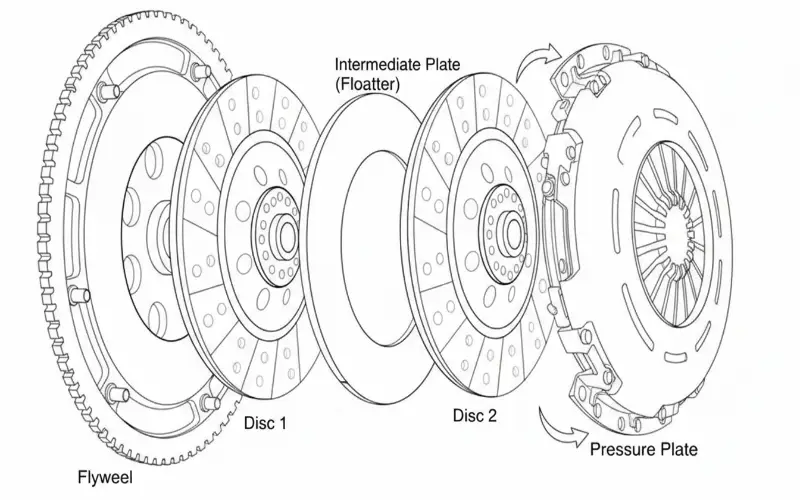
A single-stage clutch engages the transmission and PTO simultaneously, while a dual-stage lets you operate the PTO independently without moving the tractor. Dual-stage is standard on row‑crop tractors above 120 HP for stationary. Confirm your tractor’s PTO requirement before ordering the kit.
Can I mix different tractor models in one MOQ?
Yes, you can mix models if they share the same clutch type and tooling family, such as single‑stage dry clutches. Separate families with different cover stampings may each have their own MOQ. Get written confirmation on model consolidation from your supplier.
How do I verify OEM-quality aftermarket tractor clutches before ordering bulk?
Request pre‑shipment samples with factory test reports showing torque capacity and durability, and verify friction material specs. Reputable suppliers will share IATF 16949 scope and 100% test data. Always run at least one batch sample under your own quality inspection before bulk.
What is a core charge and how do I avoid it?
A core charge is a refundable deposit on the old clutch unit, returned when you send back the rebuildable core. You avoid it by ordering outright, but expect a higher unit. Choose outright purchase if core return logistics cut into your margin.
Do you offer seasonal consignment stock for large agricultural cooperatives?
Igen, nagy szövetkezetek számára tudunk szállítmányozási készletprogramokat szervezni, a készletek elhelyezését az Ön telephelyén a főszezonban. A feltételek az éves mennyiségi kötelezettségvállalástól és a pontos előrejelzéstől függenek. A 12 hónapos kereslet-előrejelzés véglegesítése után készítsen szállítmányozási szerződést.