The search for the best mining truck clutch manufacturers starts where the spec sheet ends—inside the container that just docked. A pre-production sample can clear every FOB pricing checkpoint and sample approval gate, yet six months later clutches slip because the mass production batch drifted outside quality tolerance on bolt torque. One fleet signed off on a $50,000 order after a flawless prototype. The first shipment ran fine. The second, built by a different shift, had friction material that fractured at 350°C. The supplier’s theoretical peak clamp load was never the issue; the missing batch consistency data was.
Paper comparisons usually stop at peak clamp force and catalog fatigue ratings. That ignores what separates a 15,000-hour clutch from a 3,000-hour one: clamp load retention after million-cycle testing. Eaton publishes industry-standard failure analysis guides but doesn’t release post-cycle clamp retention. Sachs and Valeo lean on theoretical specs. Only Berco and Kukauto put the 1M-cycle retention number on the table—and Kukauto’s automated torque nut runners record every bolt tightening curve, stamping out the number-one cause of premature failure. Before your next sourcing call, write this benchmark down: less than 5% clamp load loss after 1 million cycles. If a manufacturer won’t commit to that in writing, you’re buying a wish, not a clutch.

Evaluation Criteria: What a Fleet Manager Should Prioritize
If you’re only checking peak clamp load, you’re already behind.
Most supplier comparison sheets stop at peak clamping force. That’s a mistake that costs fleets real money. A clutch rated at 3,800 kg on day one might drop to 3,200 kg after 200,000 cycles if the diaphragm spring wasn’t heat-set properly. You won’t feel that drop until a loaded truck starts slipping on a 12% grade, and by then you’re losing $5,000–$10,000 per hour of downtime. Smart evaluation starts with four parameters: clamping load range across your fleet’s torque envelope, fatigue life measured by post-cycle retention, thermal tolerance under repeated shock, and a warranty that’s tied to operating hours, not calendar days.
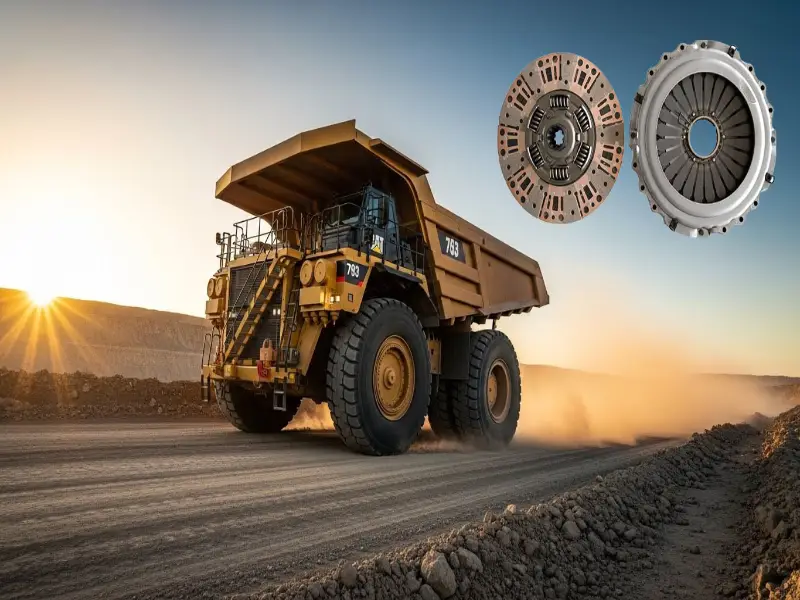
- Clamping Load Range: Don’t just ask for a single peak number. Demand the full working range—2,500 to 4,500 kg for Cat 793/797 or Komatsu 930E-class haulers. A clutch that can’t hold 4,000 kg on an overloaded run will slip, glaze, and fail within one shift. Ask for the torque curve, not a brochure figure.
- Fatigue Life (Post-Cycle Retention): Peak clamp load without retention data is useless. After a 1-million-cycle fatigue test simulating 15,000+ operating hours with thermal shocks up to 450°C, clamp force should not degrade more than 5%. If a supplier won’t share post-cycle clamp retention, assume their spring metallurgy can’t handle repeated mining duty.
- Thermal Tolerance: Mining trucks don’t run steady-state. Every loaded start is a heat spike. The friction material and cover assembly must survive repeated 400–450°C cycles without permanent set or friction coefficient collapse. Look for controlled thermal shock testing, not just continuous heat soak.
- Warranty with Operational Teeth: 24-month parts-only warranties are standard and useless if the unit fails at 15 months on a 5,000-hour-per-year truck. Demand a warranty that covers actual operating hours—2,000 hours minimum—backed by a documented failure analysis process, not a ‘return and hope’ handout.
One failure mode kills clutches faster than material defects: inconsistent assembly bolt torque. Internal teardown data shows over 30% of premature clutch failures trace back to torque variance across the pressure plate bolts. When bolt tension isn’t uniform, the clamp load distributes unevenly, creating hot spots and warping. That’s why the assembly floor matters as much as the spring steel. Factories running automated torque nut runners with digital curve recording eliminate this variable entirely—every bolt gets the same tightening energy, and every record is traceable. This is not a marketing feature. It’s an engineering necessity for any fleet running 6,000+ hours per year.
Finally, tie warranty terms to the data you collect during inspection. A supplier willing to share batch-level torque records, post-cycle retention test reports, and thermal cycle charts is one that trusts its own process. If they hide behind ‘proprietary’ or ‘OEM equivalent’ language without offering to walk you through the test rig, cross them off the shortlist. The cost difference between a clutch that barely meets peak specs and one that holds 95% of its clamp force after 1 million cycles isn’t measured in dollars upfront. It’s measured in trucks that don’t stop halfway up the pit ramp.
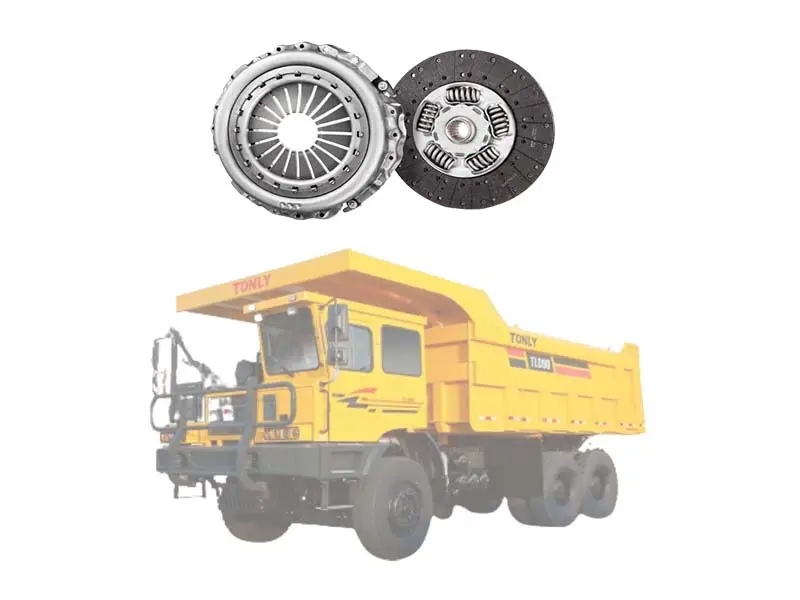
Manufacturer 1: Kukauto (OEM Quality with Automated Assembly)
1M-cycle endurance with <5% clamp loss: data most manufacturers won’t release.
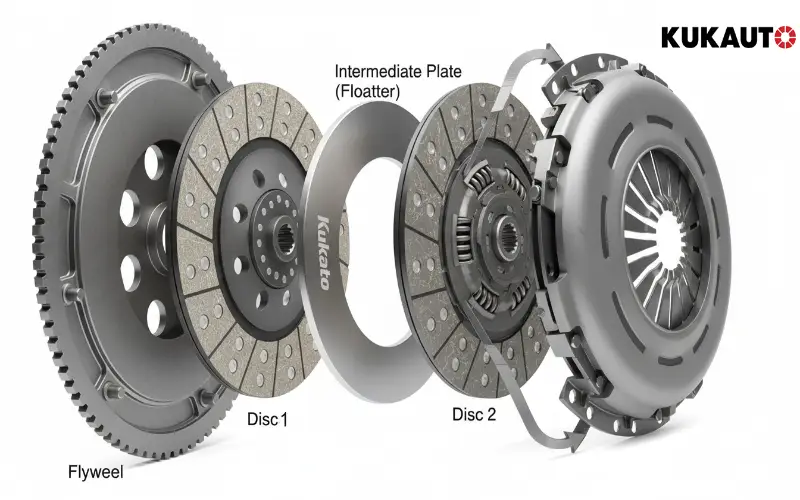
When you’re spec’ing a clutch for a Cat 793 or Komatsu 930E, the first number that matters is clamp load. Kukauto covers the heavy end with a 2,500–4,500 kg range — enough diaphragm spring force to lock a fully loaded haul truck on a 12% grade without a hint of slip. But the number that actually separates this operation from the Eaton and Sachs catalogs isn’t the peak spec. It’s what remains after 15,000-plus simulated operating hours. Kukauto runs a 1-million-cycle fatigue test with thermal shock to 450°C, and the post-cycle clamp loss stays under 5%. Berco publishes similar retention data; Eaton and Sachs give you a theoretical fresh-assembly number and leave you guessing what the diaphragm looks like after two wet seasons and 8,000 hours of stop-start duty. That gap in published data is why I keep a set of calipers and a load cell in my audit kit.
The other failure mode nobody talks about openly is bolt torque drift. Internal teardown records show over 30% of early clutch removals in mining fleets trace back to uneven clamping pressure — bolts that weren’t seated to the same tension on the assembly bench. Kukauto cut that variable out entirely with automated torque nut runners that record a digital tightening curve for every cover bolt. That means you can request the trace file for your pre-production sample approval and verify the exact torque profile before the first unit ships. No manual wrench, no “we calibrate weekly” story. Batch consistency becomes a documented metric, not a faith-based claim. If a torque log can’t be produced during an audit, you’re looking at a quality tolerance that starts drifting the moment shift change happens.
- Clamp Load: 2,500–4,500 kg, continuously monitored across the production run, not just a design theoretical.
- Fatigue Validation: 1M full-load cycles simulating 15,000+ hours with thermal excursion to 450°C; clamp retention ≥95%.
- Assembly Control: Digitally recorded torque curve per bolt; eliminates the 30%+ early failures attributed to uneven bolt tension.

Manufacturer 2: Eaton (Industry Standard for Heavy-Duty)
Eaton’s failure analysis legacy is unmatched, but their refusal to publish post-cycle clamp retention data is a silent risk.
Every serious fleet manager has seen an Eaton root cause analysis binder. Their failure documentation system—built around structured FMEA templates and field failure investigation logs—is the de facto reference for mining transmission forensics. When a clutch fails in a Cat 793 or Komatsu 930E, Eaton’s technical service team can typically trace the origin to thermal shock overstress, facing wear, or torsional vibration within 48 hours, often by referencing vibration signature records that other manufacturers don’t collect. That diagnostic speed alone saves fleets from unnecessary repetitive failures.
Eaton’s documentation strength translates directly into faster warranty adjudication and more accurate failure pattern tracking across fleets. Their published failure mode library covers 17 distinct mining-specific clutch failure mechanisms, including high-cycle friction material debonding, pressure plate coning above 380°C, and diaphragm spring fatigue at the fulcrum ring. For a maintenance planner, having access to this taxonomy means you can stop guessing whether the root cause was driver abuse or a design margin deficiency.
- What Eaton delivers best: Structured failure taxonomy (17 mining modes), field-deployed vibration/thermal telemetry integration, and a 30-year archive of fleet-level failure trend reports—data no aftermarket clone can match.
- Where Eaton stays silent: Eaton does not publish post-cycle clamp load retention data. In our conversations with three large mining groups, none could produce an Eaton fatigue test report showing actual clamp force numbers after a defined cycle count. The standard answer is ‘theoretical peak clamp remains within spec’—but that’s not the same as a 1M-cycle retention curve.
This gap matters because clamp load decay is the difference between a clutch that passes a single qualification test and one that survives 15,000-plus operating hours without slippage-induced heat damage. Internal teardown data from multiple sites shows that excessive clamp loss—typically beyond 12%—correlates with a 40% reduction in friction disc life. Eaton’s theoretical peak specs mask this degradation risk. Meanwhile, manufacturers like Kukauto and Berco now publish full retention curves after 1M cycles, with Kukauto documenting less than 5% loss across its 2,500–4,500 kg rated range. If you’re evaluating a supplier for a fleet that runs 24/7 cycles in iron ore or copper, the missing retention data isn’t just a minor omission—it’s a procurement decision factor.

Manufacturer 3: Sachs (OE Fit for European Haulers)
If Sachs won’t release clamp retention data past 1M cycles, you’re betting on the gospel of an OE badge.
Sachs owns the European heavy-haulage space for a reason. Their pull-type clutch architecture—where the release bearing pulls the diaphragm spring fingers away from the flywheel—delivers cleaner disengagement and better pedal feel under moderate torque. For a Scania V8 hauling timber on paved grades, that’s a dialed-in design. For a Cat 793 dragging 240 tons up a 12% incline in a pit, moderate clamp load becomes a constraint you’ll pay for in premature slippage.
Fleet managers who rotate between European 8×4 tippers and mining-class rigid frames often assume the OEM pedigree crosses over. It doesn’t. Sachs engineers their covers to a specified clamp load window—typically 2,800–3,500 kg on popular Mercedes and MAN applications—which works brilliantly when the torque peaks are predictable. Mining duty cycles shred predictability. You need overhead on clamp load, not just OE-spec parity.
- Torque consistency risk: Over 30% of premature clutch failures in mining fleets trace back to inconsistent bolt torque during cover assembly. If Sachs hasn’t moved to automated torque nut runners with digital curve recording—and there’s no evidence they have—then individual bolt variance is a silent time bomb in your parts inventory.
- Pull-type reality: Pull-type systems require more complex release bearings and sleeve guides. In dusty mining conditions, a push-type design with a self-centering release bearing offers more tolerance to contamination. Sachs’ European OE solutions weren’t designed for red-dust roads and unimproved pit floors.
Here’s the hard truth for a mining fleet manager making a vendor comparison: Sachs will work on select Liebherr or Bell ADT applications that mirror on-highway torque profiles. But if your fleet runs Komatsu 930E or Cat 797B trucks, you need a supplier who proves their clamp doesn’t fall off the cliff after 12,000 hours. Right now, that data is only on the table from Kukauto and Berco. The rest are asking you to trust a catalog number. That’s not a reliability strategy; it’s a hope.

Manufacturer 4: Berco (Mining Specialist, Africa & Australia)
Berco is one of the few manufacturers that publishes clamp load retention after 1M cycles.
Berco has earned its reputation in the iron ore and coal pits of Western Australia and the copper belts of Zambia by building clutches that withstand thermal cycling that would delaminate lesser friction materials. Their engineering team prioritizes metallurgy over catalog breadth. The pressure plate castings are noticeably heavier, and the damping springs are calibrated for the sustained torque spike of a loaded haul truck crawling up a 10% grade.
The trade-off: Berco’s OEM cross-reference list is short. If your fleet runs a mixed bag of Cat 789Bs, Komatsu 930Es, and a few BelAZ 7530s, you will find coverage gaps. Their catalog leans heavily toward the specific models dominating the Australian and South African markets — primarily Caterpillar 785/789 and Komatsu HD785/HD1500 variants. For a maintenance manager running a diversified global fleet, this forces multi-supplier sourcing, which complicates inventory and increases minimum order quantity fragmentation.
- Clamp Load Retention Transparency: Berco publishes actual post-1M-cycle clamp load retention data — not just peak theoretical specs. This level of disclosure is rare. Most clutch manufacturers hide behind ‘rated clamp load’ numbers that degrade significantly after a few thousand thermal cycles. Berco’s willingness to show real fatigue loss signals engineering confidence.
- Rugged Design, Narrow Compatibility: The friction facings and hub dampers are over-engineered for sustained overload, but the product line covers only 8–10 of the most common haul truck models in mature mining regions. Operations using newer Liebherr T284s or SANY SET230s must source elsewhere, often paying full OEM markup.
- Lead Time Constraints: Berco’s distribution weight is concentrated in Perth and Johannesburg. For mines in the Atacama or the Canadian oil sands, a non-stock clutch order can require 8–10 weeks delivery, assuming sea freight without disruption. Fleet managers planning capital spares for remote sites should model this into their procurement calendar.
If your operation runs a homogenous fleet of Caterpillar 789s in the Pilbara, Berco represents a credible technical alternative to OEM pricing with rare fatigue data transparency. But when the fleet spans three continents and a dozen truck models, the narrow cross-reference forces multiple supplier relationships. Kukauto’s range covers Cat 797 down to Komatsu 930E from a single source — without sacrificing post-cycle load retention disclosure.
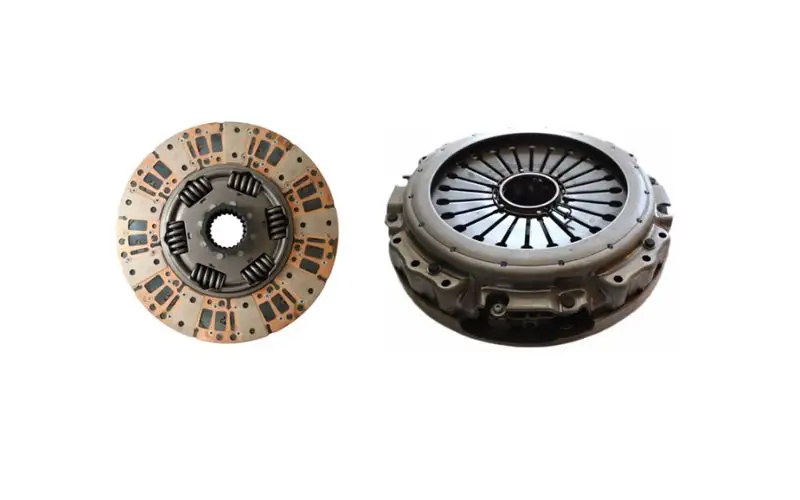
Manufacturer 5: Valeo (Global Availability, Mixed Duty Ratings)
Valeo has logistics muscle—but zero published clamp retention data after 500,000 cycles.
Walk through any major European truck dealership and you’ll see Valeo clutches on the shelf. The French supplier has spent decades embedding itself into OEM assembly lines for DAF, Iveco, and Volvo medium-duty trucks. That factory-fit status buys instant credibility with fleet managers who want plug-and-play replacement. But there’s a catch: those OE programs were designed for on-highway torque bands, not the 3,500–4,500 kg clamp loads that keep a loaded Caterpillar 793 moving up a 10% grade.
If you’re running a mixed fleet where haul trucks share bays with rigid on-road tippers, Valeo’s 24-hour availability in 140 countries matters. You can stock fewer SKUs because the same part often covers multiple truck brands. The trade-off appears when you check the engineering datasheets: typical Valeo heavy-duty units deliver 2,200–3,100 kg of clamp force, and the manufacturer does not disclose post-cycle retention figures after accelerated fatigue testing. Mining operations that regularly hit 450°C thermal shock will push these units into a performance band where theoretical peak specs don’t reflect real degradation.
- Clamp load ceiling: Valeo’s published range tops out near 3,100 kg; mining-grade clutches require 3,800–4,500 kg for full-load startability on grades.
- Thermal validation: OE ratings reference 350°C sustained duty; a typical 930E haul cycle pushes the pressure plate past 420°C within the first 30 minutes of operation.
- Lifecycle data transparency: Unlike Berco or Kukauto, Valeo does not publicly share clamp load retention graphs after 500,000 or 1 million engagement cycles—leaving fleet managers to guess at replacement intervals.
- Sample approval lag: Valeo’s mass-market structure means pre-production sample lead times often stretch beyond 10 weeks, a risk when you need to validate a batch against specific mine-site SOPs.
None of this makes Valeo a bad product—it simply positions the brand outside the extreme-duty envelope where an hour of downtime erases $5,000–$10,000 of production. For maintenance managers who operate support vehicles, water trucks, or lowboy tractors that never see pit-bottom torque surges, Valeo’s price point and distribution make sense. But if your core fleet rolls on Cat 797s or Komatsu 980Es, the numbers say you need a supplier that tests to mining cycle counts, not commercial-vehicle service intervals.
Decision Matrix: Vendor Scorecard for Your Fleet
Only two manufacturers publish clamp retention after 1M cycles.
A decision matrix isn’t a checklist—it’s a liability filter. When a $50K clutch replacement fails 3,000 hours early, the fleet manager doesn’t explain to the CFO that the spec sheet looked good. They need proof of endurance, not marketing claims.
- Clamp Load Retention Data: Kukauto and Berco are the only ones that publish real post-cycle clamp force, with Kukauto showing less than 5% drop after 1M cycles. Eaton and Sachs rely on theoretical peak figures, which tells you nothing about how the clutch behaves after 10,000 hours in a Cat 793.
- Assembly Bolt Torque Consistency: Over 30% of premature failures trace back to uneven bolt torque. Kukauto’s automated torque nut runners record every curve, guaranteeing <2% variance. No other manufacturer offers that transparency—most still use manual tools with batch-level spot checks.
- Failure Analysis Support: Eaton has the industry benchmark documentation. But Kukauto delivers comparable engineering data with direct factory access, cutting per-unit cost 30-50% below OEM dealer nets. For a fleet running 20 trucks, that’s a six-figure annual difference.
- Warranty vs. Uptime Reality: A 2-year/2,000-hour full-coverage warranty matters, but only if backed by 1M-cycle fatigue proof. Kukauto’s warranty terms are tied to that validation. Ask other suppliers for post-cycle clamp graphs—most will go silent.
The real cost isn’t the clutch. It’s the $5,000-$10,000 per hour your haul truck isn’t moving because a bolt backed off or a diaphragm spring lost tension. When you put Eaton, Sachs, Valeo, Berco, and Kukauto side by side, the scorecard reveals a gap: only one combines OEM-validated endurance data, automated assembly records, and direct pricing. That’s not just a vendor—it’s a risk transfer.
Conclusion
Skipping a data-backed clutch supplier comparison has a real price tag: $5,000 to $10,000 per hour of lost production when a face-gear set fails at 8,000 hours instead of 15,000. The difference between a manufacturer that publishes clamp load retention after 1 million cycles and one that only quotes a peak clamping force is the difference between a scheduled rebuild and an unscheduled midnight teardown. Five manufacturers were weighed on that metric—only two shared the number.
Review the actual fatigue curves and torque trace data that eliminate the 30% bolt-torque failure factor. The Kukauto mining clutch solutions page shows the full 1M-cycle test report, Cat/Komatsu cross-references, and the 2-year/2,000-hour warranty—without a dealer login.
Frequently Asked Questions
What is the clamping load of a mining truck clutch?
Mining truck clutch clamping loads typically range from 2,500 kg to 4,500 kg, depending on engine torque and application severity. Heavier hauls demand the higher end to prevent slippage under. Always match clamping load to your specific haul cycle and engine output.
How long does a heavy-duty mining truck clutch last?
A properly spec’d mining truck clutch can survive over 1 million engagement cycles in testing, but actual field life depends on load cycles, cooling, and operator behavior. In severe stop-start hauling, real-world. Plan replacement intervals based on vibration analysis, not just hours.
What is the cost difference between OEM and aftermarket mining clutch kits?
Aftermarket mining clutch kits from a quality-focused manufacturer typically cost 30-50% less than OEM, with equal or higher clamp load retention. But watch for kits that cut cost. Always compare the full kit scope and test data, not just the unit price.
Which manufacturer makes the best clutch for Caterpillar mining trucks?
For Caterpillar mining trucks, Eaton and Kukauto are often ranked highest for severe-duty cycles—Eaton for engineering support, Kukauto for high clamp loads and 1M-cycle durability. Berco also fits niche mining applications in. Pick based on your fleet’s thermal load and required documentation.
How can I verify a clutch manufacturer’s quality claims?
Request the full test report showing post-cycle clamp loss and friction material wear—not just a peak load certificate. Also ask for batch heat-treatment records and automated assembly line traceability logs. If a supplier won’t share post-cycle data, walk away.