
Introduction: The Fundamental Divide in Power Transmission
In the world of heavy-duty machinery, torque is king, but how that torque is transferred determines the machine’s efficiency and lifespan. For fleet buyers and repair shop owners, understanding the fundamental divide between Dry and Wet clutch systems is essential for making informed purchasing decisions.
Defining the Basics
Operates in an air environment within the bell housing. Relies on friction material grip and air cooling. Simple, efficient, and cost-effective.
Multiple friction plates submerged in a bath of transmission oil. The oil cools the plates and smooths engagement but adds fluid drag.
Why the Choice Depends on “Torque” and “Environment”
The choice isn’t just about preference; it’s about physics. High-speed highway transport prioritizes fuel efficiency (Dry), while stop-and-go mining operations prioritize heat dissipation (Wet). Understanding your specific duty cycle is the first step in procurement.
Technical Showdown: How They Work & Key Differences

The Dry Clutch Mechanism
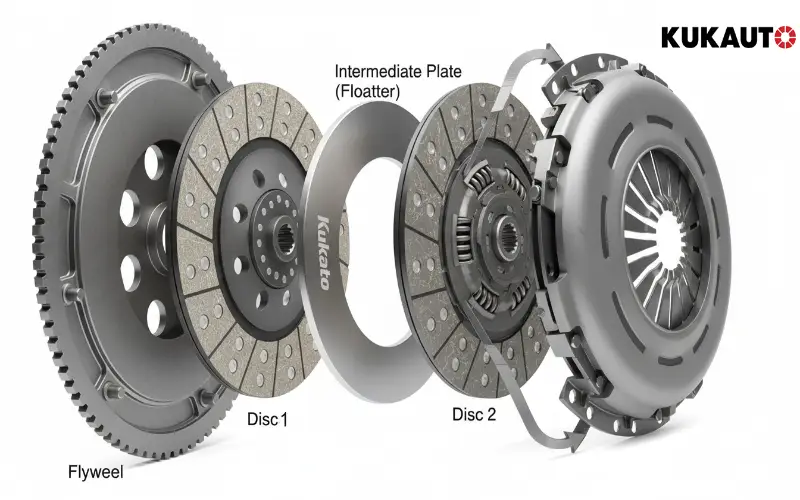
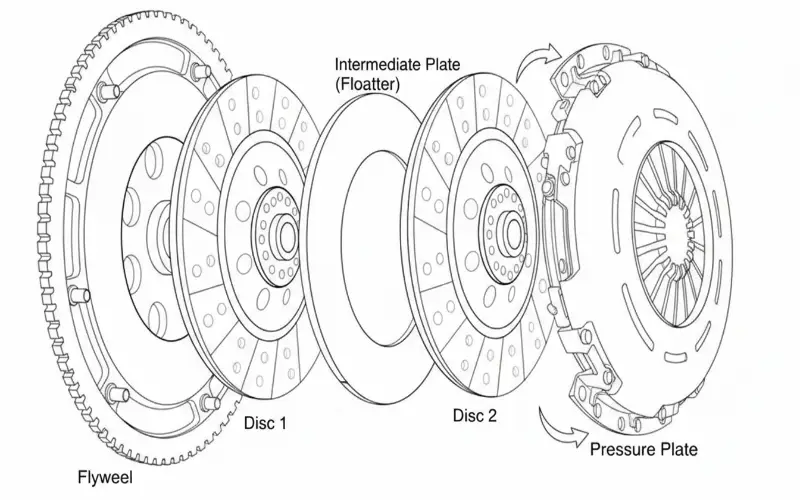
A dry clutch uses a pressure plate to clamp a friction disc against the flywheel. It is a direct mechanical lock. Because there is no fluid to cushion the engagement, it provides instant, high-friction torque transfer. Cooling is passive, relying on vents in the housing to let heat escape.
The Wet Clutch Mechanism
A wet clutch looks like a sandwich of alternating steel plates and friction discs inside a drum. Oil is pumped through the assembly. This oil absorbs the heat generated during slippage, allowing the clutch to slip for longer periods (inching) without burning out.
Material Differences
- Dry: Uses Organic (smooth), Ceramic (heat resistant), or Kevlar facings. High friction coefficient (0.35 – 0.50).
- Wet: Uses Paper-based or Sintered Bronze materials designed to work with oil. Lower friction coefficient (0.05 – 0.10), requiring more surface area (multiple plates) to hold the same torque.
Pros & Cons Comparison (The Procurement Cheat Sheet)
| Dry Clutch | Wet Clutch |
|---|---|
✅ Advantages:
|
✅ Advantages:
|
“Why do long-haul trucks hate wet clutches? It’s called Parasitic Drag. Churning through thick transmission oil consumes engine horsepower—just like running in water is harder than running in air. For a fleet driving 100,000 miles a year, a Dry Clutch translates to significant fuel savings.”
Application Guide: Which System Fits Your Vehicle?
For B2B buyers, proper application matching is critical to reducing warranty claims.
🚛 Heavy Duty Trucks (The Dry Clutch Kingdom)
Verdict: Dry Clutch.
Long-haul trucks spend 95% of their time fully engaged in high gear. They prioritize fuel efficiency and ease of roadside repair. A simple dry clutch kit can be replaced in a few hours without draining massive amounts of fluid.
🚜 Agricultural Tractors
Verdict: Hybrid Mix.
Main drive clutches are often Dry (cost-effective), while PowerShift transmissions and PTO clutches are Wet (to handle frequent hydraulic shifting under load).
🏗️ Mining & Construction Loaders
Verdict: Wet Clutch.
Wheel loaders change direction (Forward/Reverse) hundreds of times per hour. A dry clutch would burn up in days. The cooling capacity of a wet system is non-negotiable here.
Maintenance & Total Cost of Ownership (TCO)

Serviceability
Changing a dry clutch is a standard procedure for any mechanic: Remove gearbox, unbolt pressure plate, replace disc. Rebuilding a wet clutch pack requires disassembling the transmission, checking multiple plates for warpage, and replacing seals—a specialized, expensive job.
Fluid Costs: The Hidden Expense
Wet clutches require specialized tractor hydraulic fluid (THF) or friction-modified oils. Using standard gear oil will ruin the friction plates immediately. This adds a recurring maintenance cost that dry systems avoid.
Fleet Advice
To extend Dry Clutch life, driver training is key: “Don’t ride the pedal.” For Wet Clutches, the key is fluid hygiene—change the oil and filters strictly on schedule to prevent metal particles from scoring the plates.
Future Trends: Is the Industry Shifting?
The Rise of AMT (Automated Manual Transmissions)
AMTs are keeping dry clutches relevant. By using a computer to control the clutch engagement perfectly, AMTs eliminate driver error (burning the clutch), significantly extending the life of dry friction plates in heavy trucks.
Dual Clutch Transmissions (DCT)
This is the battleground. Light-duty DCTs are often dry, but heavy-duty truck DCTs (like Volvo I-Shift Dual Clutch) are moving towards wet systems to handle the immense torque output of modern diesel engines without overheating during creep mode.
Why Kukauto Specializes in High-Performance Dry Clutches
While wet clutches have their place, the vast majority of global commercial transport relies on dry clutches. Kukauto has perfected this technology to close the performance gap.
“Think of Kukauto’s Ceramic Buttons as the bridge between dry and wet technology. Because ceramic is sintered at extreme temperatures, it offers near-wet clutch heat resistance (up to 600°C) while maintaining the simplicity, efficiency, and low cost of a dry system. It’s the ultimate upgrade for heavy-duty trucks.”
Vibration Damping
Our dry clutch discs feature advanced multi-stage spring centers. These absorb the torsional vibrations from the engine before they reach the transmission, mimicking the smoothness of a fluid coupling.
Cost-Effective Solutions
We provide OEM-quality dry kits at factory-direct prices, allowing fleet managers to maintain their vehicles without the massive price tag of wet system conversions or OEM markups.
FAQ: Dry vs. Wet Clutch Queries
Conclusion
Summary Table: Quick Recap
| Criteria | Dry Clutch | Wet Clutch |
|---|---|---|
| Efficiency | High (No drag) | Lower (Fluid drag) |
| Heat Tolerance | Moderate (Air cooled) | Excellent (Oil cooled) |
| Cost | Low | High |
| Best For | Trucks, Ag Main Drive | Loaders, Powershift |
Final Recommendation
Choose based on Duty Cycle. If your vehicles run long distances on highways or fields (Continuous Duty), choose the efficiency of a Dry Clutch. If your machines perform repetitive stop-start-reverse motions (Cyclic Duty), invest in the durability of a Wet Clutch.
Need High-Performance Dry Clutches?
Upgrade your fleet with Kukauto’s Ceramic Dry Clutch Kits. Get the heat resistance close to wet systems with the efficiency and price of dry systems.