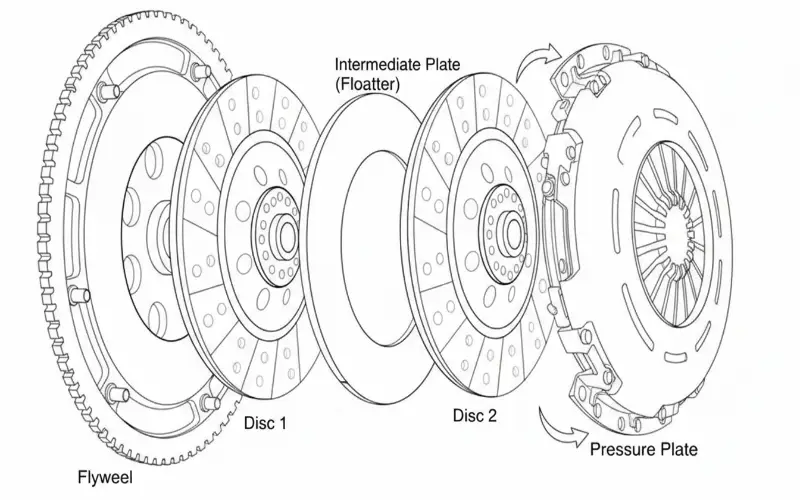
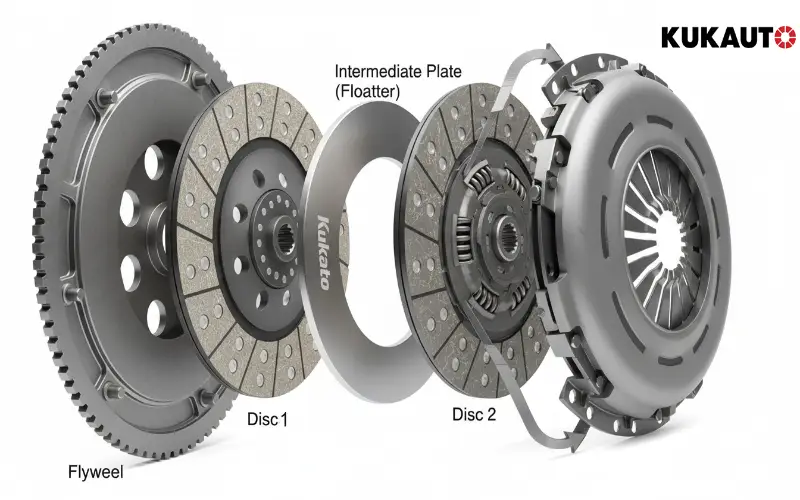
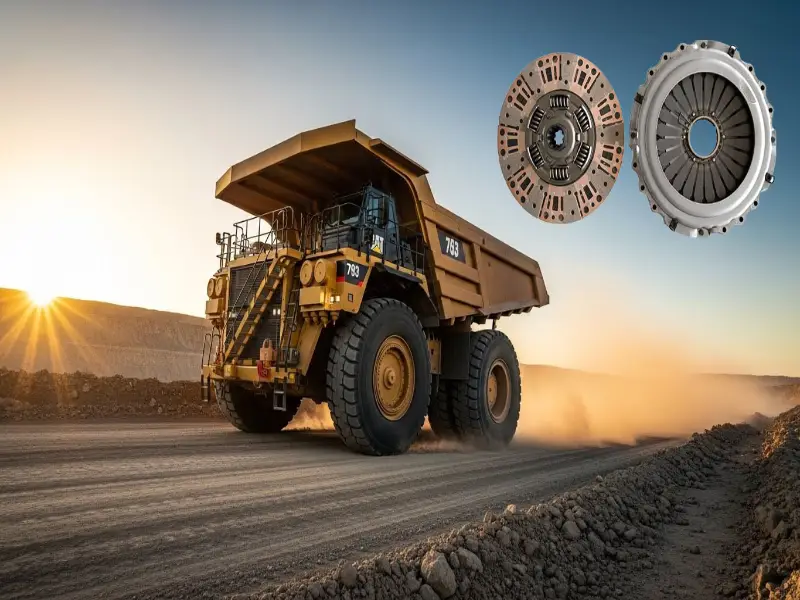
The mining truck clutch failure inspection is the first checkpoint buyers should lock before they approve a supplier, budget, or production slot. The warehouse phone rang at 4:30 AM. A Caterpillar 797 haul truck was dead on haul road 7, clutch smoking, production halted. The $50,000 clutch order that had been approved three months earlier—based on a spotless pre-production sample—had just failed its first real mining truck clutch failure inspection. The sample had passed visual checks and felt smooth on the bench. The mass-produced units? Not a single one matched the clamp load reading taken after the failure. The sample approval had been a handshake over a polished prototype; the quality tolerance on production units had quietly swung wide open.
That loss wasn’t a material defect. It was an inspection gap. The inspection relied on a visual walk-around and an engagement-feel test instead of measuring release bearing clearance, checking clamp load retention, and pulling duty-cycle heat records. The five critical tests that follow are the ones that would have flagged that bad batch before a single clutch went into a truck. Skip them, and the next $50,000 lesson belongs to your shift log—and your bottom line.

Step 1: Check Clutch Engagement Point & Free Play
Pedal free play is a guess.
Every fleet inspection checklist starts with ‘check clutch pedal free play.’ That advice is wrong — and it has cost mining operations more downtime than worn friction discs. Pedal free play is a remote indicator that drifts with hydraulic fluid temperature, linkage wear, and cab mount settling. On a Cat 797 or Komatsu 930E running 22-hour shifts, the cold 6 AM pedal reading tells you nothing about clearance at 2 PM when the transmission hits 120°C. The only measurement that counts is the physical gap between the release bearing face and the diaphragm spring fingers — measured directly at the bell housing.
Pull the clutch inspection cover. Mount a magnetic-base dial indicator on the bell housing flange, plunger contacting the release bearing carrier. Zero the indicator, then use a pry bar to gently walk the release bearing forward until it kisses the diaphragm fingers. That reading is your release bearing clearance. Rotate the engine 120 degrees and repeat twice — diaphragm fingers develop uneven wear on trucks doing loaded starts on grades above 8%. Record all three numbers. The lowest one is your true clearance, and that is the only number that goes in the inspection log.
-
- Cold clearance spec: 0.100–0.150 inch (2.54–3.81 mm) on most Eaton and ZF mining-class pull-type clutches. Always cross-check the data plate on the bell housing.
- Warning threshold: Below 0.080 inch (2.0 mm). The release bearing is riding the pressure plate fingers even when the pedal is fully released.
- Thermal factor: Clearance shrinks 0.015–0.025 inch at operating temperature. A cold measurement at minimum spec means zero clearance hot. On haul roads with 10% grades, that gap disappears within the first hour of the shift.
- Failure cascade: Zero clearance spins the bearing continuously. Grease boils out of the sealed bearing within 200 hours. The next stop is bearing seizure — which spins the clutch fork and cracks the bell housing.
A clutch running with zero release bearing clearance will not always slip. The first field symptom is a high-pitched chirp during the first 2 seconds of engagement — a noise that stops the instant the pedal is fully depressed. That chirp is the bearing face skidding across the diaphragm fingers at engine RPM. Do not adjust the linkage to ‘buy time.’ The bearing has already overheated. When it seizes, the repair stops being a $400 bearing swap and becomes a $15,000 transmission-out bell housing replacement. Eaton’s failure data backs this up: 70% of premature clutch failures telusuri kembali kesalahan pemasangan dan penyetelan, bukan cacat material. Jarak bebas bantalan pelepasan yang tepat menghilangkan satu-satunya kesalahan termahal yang dapat dilakukan oleh kru pemeliharaan.

Langkah 2: Dengarkan Suara — Memekik, Menggiling, Mengobrol
Jeritan yang hilang di bawah titik tekanan pedal tepat di bantalan pelepas — mengabaikannya adalah pertaruhan $50K/jam.
Diagnosis kebisingan bukanlah latihan stetoskop; ini adalah pohon logika interaksi pedal. Setiap suara — jeritan, gerinda, atau obrolan — dipetakan ke mode kegagalan komponen tertentu. Salah mengira bunyi deritan bantalan pilot sebagai bunyi bantalan pelepas menyebabkan transmisi ditarik dua kali, dan obrolan yang salah didiagnosis akan merusak roda gila dalam waktu kurang dari 200 jam.
Nyalakan mesin, transmisi pada posisi netral. Dengarkan suara dasar. Kemudian sandarkan kaki Anda pada pedal kopling dengan ringan — secukupnya untuk melakukan permainan bebas tanpa melepaskannya. Jeritan bernada tinggi yang muncul atau meningkat dengan sentuhan itu mengarah ke bantalan pelepas. Beban langsung bertambah pada permukaan bantalan segera setelah jari pegas diafragma bersentuhan. Jika bunyinya tetap konsisten saat Anda menekan pedal sepenuhnya, Anda masih mendengar bantalan pelepas.
-
- Pelepasan Jeritan Bantalan: Muncul dengan tekanan pedal yang ringan, meningkat melalui gerakan pelepasan, dan menghilang sepenuhnya saat kaki Anda terlepas dari pedal. Bantalan ini hanya berputar di bawah beban; tidak ada beban, tidak ada suara.
- Jeritan Bantalan Pilot: Heard with the clutch engaged (pedal up) and transmission in neutral. The input shaft is spinning at engine speed inside a dry bushing. The squeal stops the instant you depress the pedal and unload the bearing.
- Grind: A metallic grinding that changes with engine RPM regardless of clutch position often signals a failing damper spring in the clutch disc or severe input shaft bearing wear. This is a gearbox-out diagnosis every time.
- Chatter (Rattle/Shudder): A rhythmic rattle that appears only during engagement, especially under load, is the fingerprint of a warped pressure plate. Thermal overload above 600°C drops clamp load unevenly, creating a cyclical grip-slip that sounds like a hammer on the bellhousing.
The chatter pattern is the one that destroys maintenance budgets. When I hear that during a loaded start on a 100-ton rigid hauler, I already know the pressure plate casting exceeded its thermal ceiling. Eaton’s failure analysis data shows excessive heat is the root cause of the majority of heavy-duty clutch failures, not material weakness. That warpage cascades into broken damper springs, cracked flywheel friction surfaces, and a transmission input shaft with run-out.
If you’re recording noises for a remote diagnostic, capture audio from the bellhousing with a contact microphone. Separate the track into three clips: idle in neutral pedal up, light pedal touch, and full engagement under moderate throttle. That sequence alone saves a site visit and gives your supplier enough to pre-ship the right kit. Any replacement assembly you install must be dynamometer-tested for clamp load retention to within ±5% of OEM spec — if the new pressure plate isn’t flat and balanced, you’ll replay this same noise in under 500 hours.
Step 3: Inspect for Fluid Leaks (Rear Main Seal, Transmission)
Oil contamination cuts clutch torque capacity by up to 15% per drop.
Pull the inspection cover and aim a high-lumen light into the bellhousing. You are hunting for a wet, glazed sheen on the flywheel face, pressure plate diaphragm, or disc hub. Dry carbon dust is harmless; sticky, dark residue is the first red flag. Trace the leak path immediately by noting whether the fluid clings to the flywheel (engine side) or rides along the input shaft splines (transmission side).
Color and odor are your best diagnostic tools. Rear main seal leaks deposit dark amber-to-black engine oil that pools at the bottom of the housing. Transmission input shaft seal leaks produce lighter, pinkish or reddish ATF that slings outward onto the clutch cover and disc. Dab the residue with a clean white rag. If you pick up a sharp, burnt clutch smell mixed with oil, the disc is already glazed and must be scrapped — no degreaser ever restores the koefisien gesekan to safe levels.
-
- Inspection trigger: If drivers report inconsistent engagement point or pedal judder after full-load climbs, drop the cover before the next shift. Oil creates uneven friction that mimics a warped flywheel but kills the clutch in a fraction of the time.
- Seal replacement rule: Original rear main seals in severe mining duty typically last 8,000–10,000 hours. Replace the seal proactively any time the clutch is pulled for a disc or bearing swap. The incremental seal cost is negligible compared to a $50,000-per-hour unscheduled outage.
- Contamination scrap threshold: Sintered metallic facings are especially vulnerable. Once oil penetrates the porous friction layer and carbonizes at operating temperatures above 600°C, permanent torque fade sets in. The disc must be condemned — cleaning is false economy.
Saat kopling lepas, periksa rongga bantalan pilot poros input apakah ada lapisan minyak atau serpihan yang menandakan jalur kebocoran sebelumnya. Basahnya bagian ini sering kali disebabkan oleh keausan seal utama belakang sehingga oli dapat mengalir ke depan karena gaya sentrifugal. Pasang seal baru sesuai toleransi kedalaman OEM dan padukan dengan selongsong aus yang dipoles jika poros menunjukkan alur. Pada saat pemasangan ulang, gunakan metode sudut torsi (95 Nm + 120°) pada baut pelat penekan. Penyebaran torsi akibat pengencangan yang hanya disebabkan oleh gesekan akan membengkokkan housing dan mempercepat kehabisan segel masukan — rangkaian kegagalan persis yang dihubungkan oleh data Eaton dengan 70% kegagalan kopling penambangan dini.
Langkah 4: Ukur Retensi Beban Penjepit (dengan Perkakas Khusus)
Pelat penekan yang lolos pemeriksaan visual masih dapat menghasilkan kurang dari 80% gaya penjepit terukurnya — yaitu.
Saya masuk ke bengkel Pilbara di mana para kru bersumpah bahwa mereka baru saja ‘menyegarkan diri’’ kopling dengan cakram baru. Rig kembali bekerja tiga shift kemudian. Cakramnya diglasir, roda gilanya diperiksa panasnya. Akar penyebabnya? Pelat penekan telah kehilangan 22% beban penjepit statisnya. Tidak ada yang punya alat untuk memeriksanya, jadi tidak ada yang tahu. Retensi beban penjepit is the single most overlooked data point in heavy-duty clutch inspection — and it’s the one that separates a scheduled R&R from a $50,000-per-hour unscheduled meltdown.
The measurement itself requires a hydraulic load cell or a dedicated fixture that bolts into the pressure plate mounting pattern. You compress the diaphragm spring or lever mechanism through its full release travel and record the force curve. The peak reading (or plateau for angled springs) gives you the real installed clamp force. Compare it to the OEM specification stamped on the cover or the data plate shipped with the assembly. If the number is below 80% of the original rating, the unit is done. I don’t care if the friction surface still looks fresh — the spring pack has fatigued past its functional window.
-
- Tooling alternative for field checks: If a dedicated clutch dynamometer isn’t available, use a calibrated load washer under the release bearing carrier combined with a digital dial indicator. Take readings at three points around the circumference and average them. Variances over 12% between points indicate coning or uneven diaphragm finger wear — a red flag for imminent chatter.
- The 600°C threshold: Eaton’s failure analysis data confirms that thermal overload beyond 600°C permanently alters the spring wire’s temper. Even one severe overheat cycle can drop clamp load 15–25%. If your duty cycle logs show a spike above that temperature, clamp load measurement becomes mandatory, not optional.
- Why the torque-angle installation method matters here: Improper bolt torque during pressure plate installation — especially relying on a static torque wrench alone — introduces uneven preload that mimics a low-clamp-load condition. The torque-angle method (e.g., 95 Nm + 120°) eliminates friction scatter and ensures the cover sits dead-flat. When a fleet measures low clamp load on a freshly installed unit, 7 times out of 10 the problem traces back to installation torque, not the component itself.
On the supply side, every KUK mining clutch assembly leaves the factory with a dynamometer-verified clamp force within ±5% of the OEM target. That test sheet isn’t marketing collateral — it’s the baseline you need to trend retention over time. When you pull the unit at 8,000 hours, a 6% drop is acceptable life wear. A 22% drop is a process problem: either the operator is slipping it under 85% GCMW loads or the heat shielding needs an upgrade. Without that number, you’re guessing. And guessing in mining gearbox management costs more than the test equipment ever will.
Step 5: Review Duty Cycle Logs — Heat Cycles & Payload Records
Your duty cycle log predicts failures your torque wrench will never detect.
Kebanyakan manajer pemeliharaan memperlakukan Langkah 5 sebagai dokumen opsional. Mereka akan menghabiskan waktu 45 menit untuk mengukur beban penjepit tetapi tidak membuka dasbor telematika. Itu terbalik. Analisis kegagalan Eaton mengidentifikasi panas yang berlebihan sebagai penyebab utama kegagalan kopling tugas berat — dan panas tidak akan meninggalkan bekas secara visual sampai pelat tekanan telah melengkung melebihi 600°C. Log siklus tugas memberi tahu Anda apa yang terjadi di dalam rumah bel di antara pemeriksaan.
Pull three data points from your fleet management system for each truck: loaded starts per hour, average payload as a percentage of rated Gross Combination Mass Weight (GCMW), and the number of full thermal cycles per shift. A full thermal cycle isn’t just engine start/stop — it’s a complete ambient-to-operating-temperature-to-ambient cycle. On a downhill-loaded-uphill-empty route, that’s one cycle. On a pit shuttle with constant grade changes, you might be hitting four or five partial cycles that never let the clutch pack cool below 300°C.
- Loaded starts per hour: Hitung setiap keterlibatan dengan beban di atas 60% GCMW. Lebih dari 5 per jam berarti kopling tidak mendapatkan pendinginan yang memadai di antara siklus. Pada tingkat ini, keausan yang dihadapi akan meningkat hingga tiga kali lipat dari kurva degradasi standar.
- Muatan rata-rata vs. nilai GCMW: Jika truk secara konsisten bekerja di atas 85% dari nilai GCMW, kopling beroperasi di luar batasan desainnya. Ini bukan tentang beban berlebih yang terjadi sesekali — ini adalah tegangan shift-demi-shift yang menekan pegas diafragma pelat tekanan melebihi batas elastisnya.
- Jumlah siklus panas per shift: Setiap rute yang menghasilkan lebih dari 3 siklus termal penuh per shift memerlukan rakitan kopling yang dirancang untuk pengoperasian suhu tinggi secara terus-menerus. Permukaan organik standar mulai berkarbonisasi pada suhu berkelanjutan di atas 350°C. Permukaan logam yang disinter mempertahankan integritasnya hingga 600°C namun masih mengalami penurunan ketika frekuensi siklus termal mencegah pembuangan panas.
- Korelasi degradasi beban penjepit: Cross-reference duty cycle severity with clamp load measurements from Step 4. A clutch enduring 18 months of 6+ loaded starts per hour will show clamp load below 80% of OEM specification long before the friction facing reaches the 0.5 mm discard limit. That combination — high cycle count plus falling clamp load — means you’re not deciding whether to replace. You’re deciding whether to replace it this shift or absorb a $50,000-per-hour unscheduled failure.
This changes your procurement decision. If duty cycle analysis reveals this pattern across a fleet of 12 haulers, you’re not buying the same clutch kit you’ve always ordered. You need a clutch spec’d for the actual operating conditions — higher clamp load, heat-stable diaphragm metallurgy, and facings rated for your thermal cycle count. The OEM-spec replacement part was designed for a duty cycle your operation exceeded three years ago when payloads increased and cycle times shortened.
When to Order a Laboratory Wear Analysis
Field inspection shows what broke.
Sebuah tambang tembaga di Chili mengganti kopling pada Cat 797 pada 7.400 jam. Tiga bulan kemudian, transmisi yang sama memakan kopling lain. Kru pemeliharaan telah melakukan segalanya dengan benar di atas kertas: inspeksi visual, pemeriksaan gerak bebas, ketebalan permukaan diukur pada 1,1 mm — semuanya berada dalam toleransi kualitas. Apa yang mereka lewatkan adalah retakan mikro pada pelat penekan pegas diafragma, invisible without metallurgical sectioning. That repeat failure cost 11 hours of lost production at $50,000 per hour. The lab analysis they eventually ordered cost $1,800 and revealed the diaphragm spring had lost 42% of its clamp load from thermal cycling above 600°C. The real fix wasn’t a different clutch kit. It was a transmission cooler upgrade.
Most fleet managers treat lab analysis as the last resort. That logic is backwards. A lab analysis is an investment in root-cause elimination, not a diagnostic expense. When a clutch fails before 8,000 hours on a duty cycle that should deliver 10,000 to 12,000 hours, you have a systemic problem — not a parts problem. Swapping in a new assembly without understanding the failure mechanism is gambling with a $50,000-per-hour downside.
- Clamp load below 80% of OEM spec: When your clamp load test reads 78% or lower, the pressure plate has lost structural integrity. Lab analysis distinguishes spring fatigue from heat-induced warpage — two failures with completely different root causes. KUK factory testing verifies 100% of rated clamp load within ±5%, so a reading below 80% signals a serious deviation from the as-manufactured state.
- Facing wear below 0.5 mm, especially if asymmetrical: Once bahan gesekan turun di bawah sisa ketebalan 0,5 mm, Anda telah melewati batas pembuangan. Namun jika keausan tidak seimbang — 0,3 mm di satu sisi, 0,8 mm di sisi lain — analisis laboratorium mengidentifikasi penyebabnya: ketidakselarasan poros input, runout bellhousing, atau bantalan pelepas yang rusak. Inspeksi visual tidak dapat mengukur paralelisme terhadap toleransi ini.
- Pola obrolan selama pertunangan: Obrolan biasanya menunjukkan pelat tekanan yang melengkung, yang memastikan kopling mencapai suhu di atas 600°C. Analisis laboratorium mengukur pola distorsi yang tepat dan menentukan apakah panas berasal dari beban berlebih, pendingin transmisi yang rusak, atau pemasangan sudut torsi yang tidak tepat — seperti melewatkan urutan 95 Nm + 120° yang mencegah lengkungan pelat tekanan.
- Kegagalan dini di bawah 8.000 jam: Normal mining clutch service life is 10,000 to 12,000 hours under proper load management. If you are pulling clutches at 5,000 to 7,000 hours consistently, order a failure analysis on at least one unit. The report isolates whether the problem is the component, the installation procedure, or your duty cycle. A clutch operating above 85% of rated GCMW with more than 5 loaded starts per hour degrades at triple the standard wear rate.
- Repeat failures on the same vehicle: Kegagalan dua kopling pada satu truk dalam waktu 12 bulan merupakan tanda bahaya yang tidak dapat diselesaikan hanya dengan inspeksi lapangan. Analisis laboratorium mendeteksi kontaminasi bahan kimia — oli roda gigi pada cakram gesekan dari segel utama belakang yang bocor, atau residu cairan pendingin dari kebocoran penukar panas transmisi — yang selalu terlewatkan oleh pemeriksaan visual. Data kegagalan Eaton mengonfirmasi bahwa 70% kegagalan kopling prematur berasal dari kesalahan torsi pemasangan, bukan cacat material, dan hanya bukti laboratorium yang dapat membuktikan apakah pemasang Anda adalah sumber masalahnya.
Laporan laboratorium memberikan apa yang tidak dapat dilakukan oleh uji lapangan: penampang metalurgi yang menunjukkan zona yang terkena dampak panas, analisis spektrografi bahan gesekan untuk kontaminasi oli atau cairan pendingin, dan kurva degradasi beban penjepit kuantitatif. Jika laporan menunjukkan keausan merata dan tidak ada kontaminasi, Anda memperketat prosedur pemasangan sudut torsi. Jika terlihat residu kimia, perbaiki kebocoran di bagian hulu sebelum memasang kopling berikutnya. Apa pun yang terjadi, Anda berhenti mengobati gejalanya dan mulai menghilangkan akar penyebabnya.
Lewati analisis laboratorium jika terjadi kegagalan dini, dan Anda akan mengulanginya. Dengan waktu henti yang tidak terjadwal sebesar $50.000 per jam, ditambah peralatan pengganti dan tenaga kerja, Anda bertaruh sekitar $300.000 terhadap laporan laboratorium sebesar $1.800. Itu adalah peluang yang sangat buruk. Pesan analisis saat kopling pertama kali gagal di luar jangka waktu servis yang diharapkan — dan gunakan laporan tersebut untuk mencegah kegagalan kedua sepenuhnya.
Kesimpulan
A clutch that passes a visual check can still fail inside 500 hours. The five tests here — engagement point, noise isolation, leak inspection, clamp load measurement, and duty cycle review — catch the failures that eyes miss. At $50,000 per hour of unscheduled downtime, skipping the 0.5 mm facing wear limit or the 80% clamp load threshold isn’t a shortcut. It’s a liability.
When your inspection flags a unit that needs replacement, the quality tolerance on the new assembly becomes the next decision point. The benchmark that matters on your supplier call is this: every clutch should ship with a dynamometer test certificate showing clamp load within ±5% of OEM spec. If the supplier can’t provide that paperwork, you’re buying an unknown variable into your fleet’s duty cycle. Review the full lineup of tested mining truck clutch assemblies to match your haul truck models against current engineering data.
Pertanyaan yang Sering Diajukan
How to tell when your clutch needs to be replaced?
Anda memerlukan penggantian ketika titik pemasangan pedal tinggi, Anda mendengar bunyi berceloteh saat ada beban, atau rumah bel menunjukkan kebocoran oli. Kehilangan beban penjepit diukur. Jadwalkan penggantian saat dua tanda muncul, atau waktu henti yang tidak terjadwal akan memakan biaya lebih besar daripada biaya kopling.
Bagaimana cara mengidentifikasi tanda-tanda kopling rusak?
Kopling yang rusak sering kali tergelincir saat muatan penuh, mengeluarkan bau bahan gesekan yang terbakar, atau menimbulkan permainan bebas yang berlebihan sebelum digunakan. Tes retensi beban penjepit memberikan angka pasti. Gantilah pada saat penurunan pertama yang dapat diandalkan, bukan setelah terjadi kegagalan panggilan jalan raya.
Apakah seharusnya ada celah antar komponen kopling?
A small gap between the pressure plate and flywheel is normal before final torque. Once properly torqued, the assembly must sit flush with no gap. Verify zero gap after full torque; any residual gap points to misalignment or a damaged diaphragm spring.
What are the symptoms of a failing mining truck clutch?
Primary symptoms are slippage on steep grades under full payload, heavy chattering during gear engagement, and a burning smell from the bell housing. Oil contamination from a. Park immediately if any of these appear; continued operation will destroy the flywheel and driveshaft.
How much does a mining truck clutch replacement cost?
A large mining truck clutch replacement, such as for a Cat 797, can exceed $50,000 installed when counting the kit, special tooling, and labor. Cost swings with OEM versus aftermarket. Request a site-specific quote that includes core return credit and warranty terms.