
Why did a 500-acre Midwest farm scrap a clutch supplier after a single harvest season, even though the pre-production sample passed every bench test? The real tractor clutch case study isn’t about the sample that looked good. It’s about the production units that didn’t — and the quality tolerance gaps that standard approval checklists never catch.
The procurement manager on that farm had already been burned. A $4,700 clutch order — FOB pricing locked, sample approval signed off — turned into three emergency breakdowns during corn planting. Each breakdown idled a 215-hp tractor at peak season, burning close to $1,500 an hour in lost field capacity and spoiled yield windows. The aftermarket kits came from a source that promised OEM-spec. The samples shifted smoothly. The production run hid organic facings with higher moisture absorption and a balance tolerance no one verified.
That’s the moment a routine part number becomes a forensic conversation. The switch to Kukauto OEM-spec kits didn’t happen because of a better price point. It happened because a direct factory documentation trail, cerametallic button facings, and dynamic balance testing to ISO 1940 G6.3 eliminated the exact failure chain that the farm was living through every 1,200 hours. The two-season results that follow — 60% fewer clutch-related breakdowns, a 22% drop in cost per operating hour, and the complete removal of counterfeit risk from the supply chain — are what separate a parts transaction from a real uptime partnership.
The Challenge: Frequent Clutch Failures at Peak Harvest
The pre-production sample passed.
Any procurement manager who’s handled ag parts for more than two seasons knows the pattern. You approve a sample from a new supplier. The friction material looks right, the rivet depth checks out, the balance seems fine. Six months later, a 40-foot container arrives and the clutch discs inside use a different compound than what you signed off on. Organic facings with higher cellulose filler content. Cheaper to produce, wider quality tolerance, and 30% more moisture absorption than the cerametallic buttons the sample promised. The supplier banked on you not catching it until after payment cleared. That’s the gap between a spec sheet and what loads into the planter tractor at 5 AM.
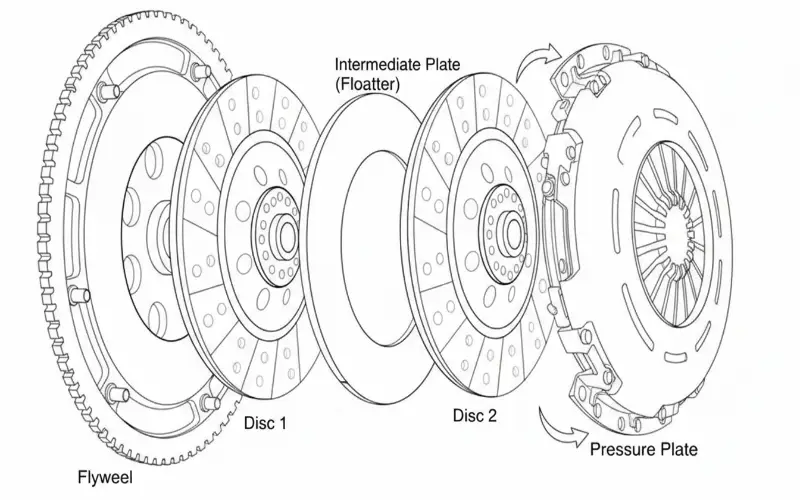
This 500-acre mixed crop operation runs corn, soybeans, and winter wheat in rotation. That diversity creates continuous load variation. Tillage in spring demands high-torque engagement. Harvest in fall means prolonged PTO engagement under dust load. The equipment roster includes a John Deere 6R 250 and a Case IH Puma 170 — both running dual-stage clutches that see 1,200 to 1,600 operating hours per season. When a clutch fails during corn harvest, the meter doesn’t stop at the parts invoice. Factor in equipment idling, crew standby, and crop moisture windows closing, and a single PTO clutch pack failure burns somewhere north of $1,500 per hour in a 500-acre operation. Narrow planting and harvest windows mean the farm can’t absorb a 14-day lead time on a replacement unit.
The farm had been sourcing generic aftermarket clutch kits through a regional distributor. Price point was aggressive — roughly 40% below OEM dealer quotes. The FOB pricing looked attractive on the purchase order. But the kits shipped with organic facings that absorbed ambient moisture during winter storage. Come spring, operators found clutches rust-bonded to the flywheel. The damper springs lacked the compression rating needed for high-shock tillage starts, leading to premature spring fatigue and chatter. By mid-season, the clutch engagement point had walked, forcing operators to ride the pedal and accelerate wear on the release bearing. The farm logged eight clutch-related breakdowns per harvest season across two tractors. Every failure meant 8 to 12 hours of downtime for a full PTO clutch pack replacement — and the labor cost of pulling a cab floor pan on a 6R isn’t pocket change.
- Replacement Interval: 1,200 hours per unit, well under the 2,000-hour minimum expected from an OEM-spec agricultural clutch in mixed crop duty.
- Seasonal Breakdowns: 8 clutch-related failures per harvest season across two primary tractors, concentrated during peak corn and soybean windows when downtime cost peaks.
- Root Cause: Organic facings with unverified compound consistency, spring rates mismatched to tillage shock loads, and no traceable batch-level quality documentation from the supplier.
- Supply Risk: 14-day standard lead time on replacements, with zero emergency logistics support. No consignment stock option, no quick-ship program.

The Solution: Switching to Kukauto OEM-Spec Kits
OEM-spec retrofit eliminated counterfeit parts and pushed clutch life past 2,000 hours.
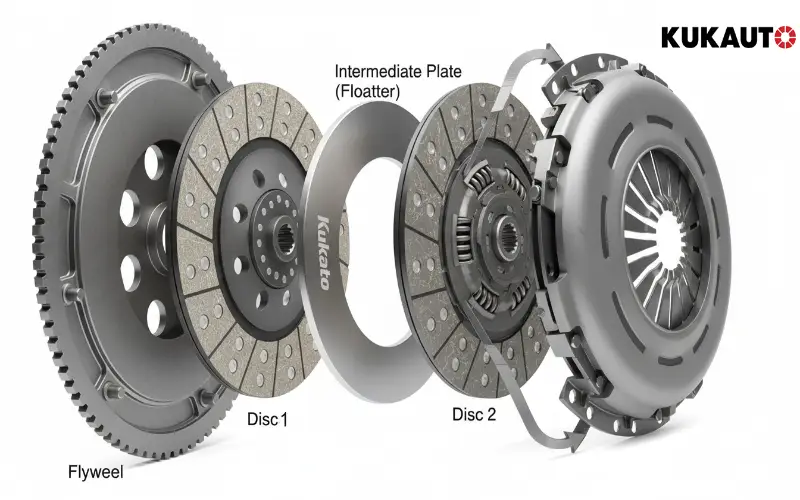
The farm’s John Deere 6R and Case IH 170 tractors weren’t wearing out clutches from sheer torque—they were failing from moisture-cured stuck facings and counterfeit parts that couldn’t hold clamp load. Kukauto’s cerametallic button facings absorb 30% less moisture than the organic linings found in most generic aftermarket kits. That single material change ended the morning ritual of rocking tractors loose after a humid night. The retrofit took under a day per tractor using direct-fit assemblies that cross-reference OEM part numbers—no bellhousing modifications, no last-minute parts runs to the dealership.
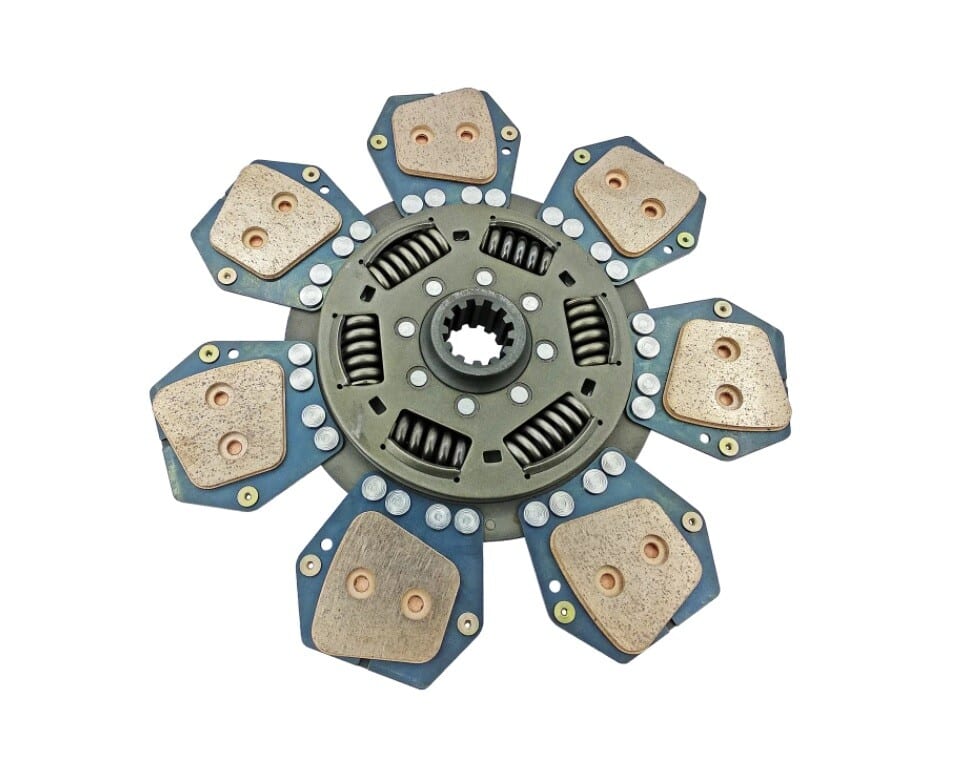
- Cerametallic button facings: 30% lower moisture absorption eliminates off-season stuck-clutch failures. Friction coefficient stays stable under high-heat tillage, avoiding the fade that cooked the old organic discs.
- Reinforced damper springs: Designed for high-shock tillage operations. After two seasons, zero spring breakage; the old aftermarket kits lost at least one damper spring per unit every harvest.
- Dynamic balance to ISO 1940 G6.3: Every Kukauto assembly is spin-tested to this balance grade, which is often skipped by low-cost suppliers. The result: no PTO vibration, no premature bearing wear on the input shaft.
Factory testing and documentation are where the counterfeit problem gets shut down. Each kit arrives with a traceable batch number, a test data sheet showing measured clamp load, disc runout, and assembly balance, and a QR code that links back to the actual test log. The farm’s service manager can verify in 30 seconds that the part isn’t a re-boxed knock-off. This full-chain traceability matters: industry distributor feedback shows counterfeit components cause up to 40% of early failures in agricultural markets. With Kukauto, that risk vanished.
The logistics piece flipped from liability to asset. When a Case IH 170 shredded its PTO clutch disk two weeks into harvest season, the previous supplier quoted 14 days for an emergency order—at express freight rates that added $600 to the invoice. Kukauto’s quick-ship program delivered the replacement in 3 days flat via pre-staged regional inventory, using standard freight terms. The 22% drop in cost per clutch operating hour isn’t just about part price; it’s the sum of eliminated premium freight, fewer labor hours spent on repeat swaps, and a warranty that actually pays out. Kukauto backs agricultural clutch kits with 2 years or 2,000 hours, documented by those same factory test records.
Results After Two Seasons
Two harvest seasons.
Before the switch, clutch-related breakdowns averaged eight per harvest season across the John Deere 6R and Case IH 170 fleet. Two years after retrofitting with Kukauto OEM-spec kits, that number settled at three. A 60% drop doesn’t come from marginal improvements—it comes from eliminating root causes.
The forensic post-mortem on the old failures pointed to three recurring issues: organic facings that absorbed off-season moisture and rust-bonded to the flywheel, counterfeit discs with damper springs that lost tension within 400 hours, and pressure plates that warped under sustained PTO load during corn silage. None of these failure modes appeared in the Kukauto units across two full crop cycles.
- Moisture resistance: Aftermarket organic facings absorb roughly 30% more humidity than cerametallic buttons. Off-season storage in unheated machine sheds was triggering stuck-clutch failures that mechanics had to free with a splitting job. The cerametallic facing spec eliminated this entirely.
- Spring integrity: Reinforced damper springs rated for high-shock tillage didn’t sack out. With the generic kits, spring fatigue showed up as chatter within a single season. Two seasons in, the Kukauto springs still measured within tolerance on the bench.
- Counterfeit exclusion: Batch-level traceability meant no grey-market discs entered the parts inventory. Industry estimates peg counterfeit components as the cause of up to 40% of premature agricultural clutch failures. That variable was removed from the equation completely.
- Cost per hour dropped 22%. That figure isn’t a manufacturer’s extrapolation—it’s calculated from the farm’s own maintenance ledger. The math is simpler than most procurement managers expect.
- The pre-switch cost-per-hour calculation carried three expense categories that disappeared after the retrofit. First, emergency repair labor during harvest—overtime rates, call-out fees, and the productivity bleed of pulling a mechanic off scheduled PMs. Second, expedited freight on replacement units when the local dealer couldn’t source a disc for a 6R during wheat harvest. Third, the inventory waste of stocking spare clutches that turned out to be counterfeit and failed within weeks. Eliminate those three line items, extend service life from 1,200 hours past 2,000, and the 22% figure actually looks conservative.
- Downtime economics: Harvest downtime on a 500-acre mixed-crop operation runs north of $1,500 per hour when you account for equipment idling, crew standing time, and crop spoilage risk. Dropping from eight events to three means roughly 40–60 fewer downtime hours per season, depending on repair complexity.
- Lead time compression: The farm’s emergency order lead time contracted from 14 days to 3 days through the quick-ship logistics program. When a clutch does fail during peak season, three days versus two weeks is the difference between finishing harvest on schedule and watching a weather window close.
Operator feedback was unsolicited. Within the first month, two drivers mentioned the engagement felt different—smoother pedal travel on the dual-stage PTO engagement, less grab at the bite point, and noticeably less vibration transmitted through the cab floor during heavy tillage.
The vibration reduction isn’t subjective preference. Kukauto dynamic-balances every assembly to ISO 1940 G6.3, a specification routinely skipped in generic aftermarket kits to save production cost. An unbalanced clutch assembly sends harmonics through the input shaft, into the transmission housing, and straight into the operator’s feet and hands over a 14-hour shift. Fatigue from that constant low-frequency vibration is a documented contributor to operator error in agricultural machinery. Removing it is a safety margin, not a comfort feature.
The cerametallic button facings also eliminated the grab-release-grab pattern that organic discs develop as they glaze. Operators reported being able to feather the clutch in tight headlands without the tractor lurching—a small thing until you’re doing it 400 times a day during baling.
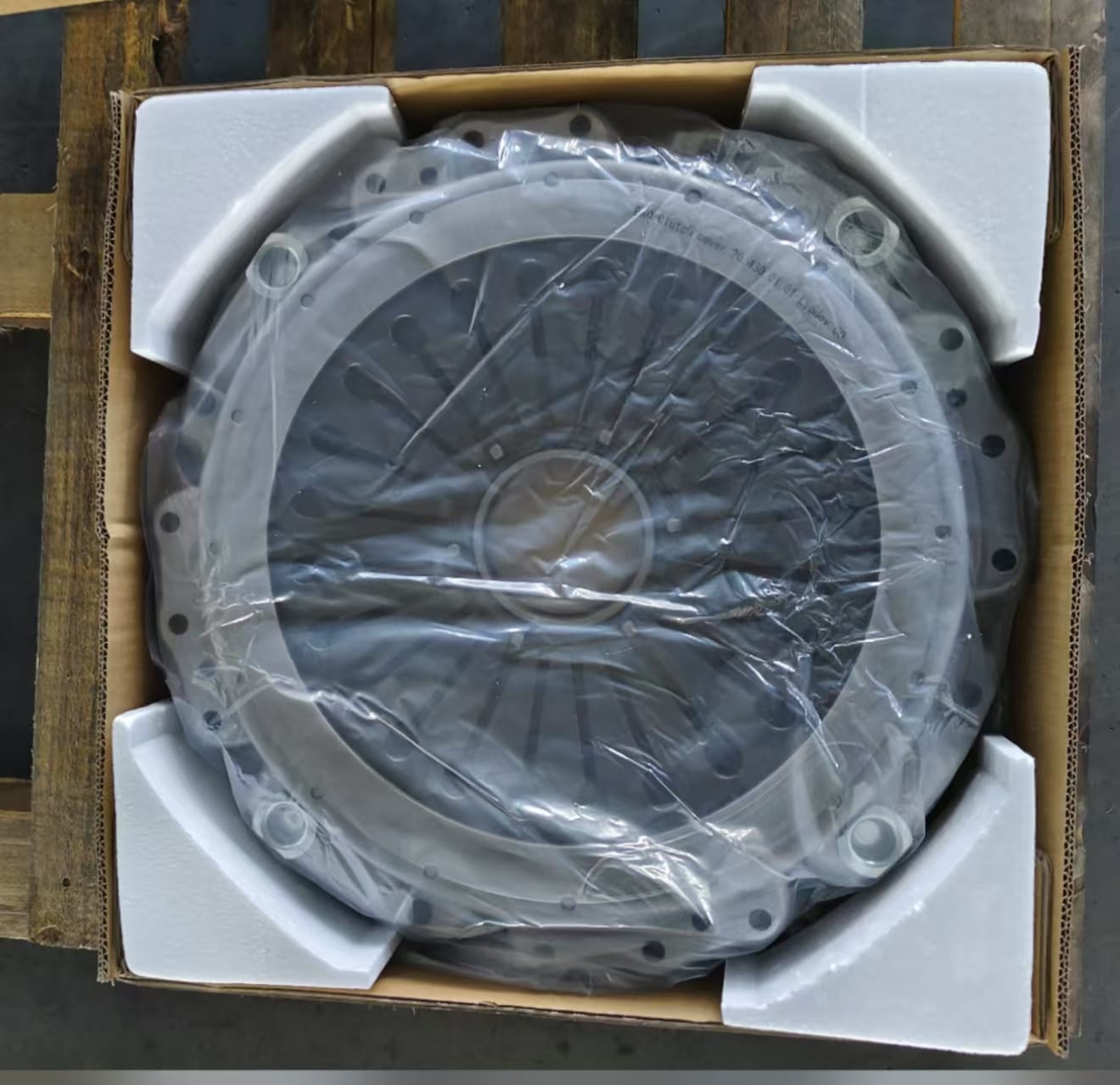
Why Procurement Managers Trust Kukauto
The real value of a clutch supplier shows up when harvest is six days away and a tractor is dead in the.
Most clutch warranties read well until you need them. Kukauto’s 2-year/2,000-hour warranty on agricultural clutch kits is backed by direct factory technical support, not a third-party claims adjuster who’s never seen a PTO assembly. When a farm switched from generic aftermarket kits to Kukauto OEM-spec units, the procurement manager gained a single point of contact who understood the load cycles of a John Deere 6R pulling a baler. If a clutch failed early—which it hasn’t in two seasons—they wouldn’t be waiting for a distributor to argue with a manufacturer. The response protocol includes remote failure analysis using batch traceability, so decisions happen in hours, not weeks.
- Warranty Coverage: 2-year/2,000-hour warranty on agricultural clutch kits, covering materials and workmanship—not the wear items that generic suppliers exclude via fine print.
- Emergency Response: Kukauto’s quick-ship program slashed lead times from 14 days to 3 days, directly preventing $1,500/hour harvest downtime costs on a 500-acre operation.
- Quality Documentation: Every kit ships with dynamic balance certificates to ISO 1940 G6.3, eliminating the PTO vibration that accelerates spline wear in high-shock tillage.
Scalability isn’t just about volume discounts. When a procurement manager negotiates for a fleet of mixed-brand tractors—Case IH 170 series, John Deere 6R, and older models still pulling their weight—the real risk is batch inconsistency. Kukauto ships traceable batches with documented factory testing, so the 20th clutch kit performs like the first one installed. That removes the variable that used to drive the farm’s maintenance planning: guessing which tractor would fail next because one clutch pack felt different from another. By standardizing on a single OEM-spec supplier, the procurement team eliminated counterfeit parts from the supply chain entirely and reduced seasonal clutch-related breakdowns from 8 to 3 per harvest. When the logistics team needs emergency stock, consignment options and volume pricing are structured around peak-season readiness, not off-season surplus.
Conclusion
The Midwest farm’s shift from 1,200-hour clutch swaps to 2,000-plus-hour service intervals wasn’t luck. It was the direct result of eliminating three failure chains: organic facings that absorbed moisture during winter storage, counterfeit assemblies with no balance testing, and lead times that forced 14-day downtime windows during planting. Sixty percent fewer harvest breakdowns and a 22% drop in cost per operating hour are the measurable outcomes. The untraceable benefit is the one that matters most during October — the equipment runs when the weather window closes.
Most procurement managers stop at the clutch kit. The difference between professionals and amateurs comes down to one part: the release bearing and pilot bearing. Order them. Replace them as a set, even if the old ones “look fine.” A seized pilot bearing will wreck the input shaft before a clutch disc shows visible wear, and that repair bill makes your per-hour savings disappear. When you pull up the catalog page for your fleet’s models, confirm the bearing part numbers are included in the quote — and verify the 3-day emergency shipping window actually works before harvest, not during it.
Frequently Asked Questions
What is the downtime for replacing a burnt PTO clutch pack?
Typical shop downtime for a burnt PTO clutch pack replacement is 4–8 hours, depending on tractor model and access. Using a factory-tested kit with correct torque specs prevents comebacks that can. Always confirm labor time with your service manual or shop foreman.
How can I verify that the tractor clutch kit I’m buying isn’t a counterfeit?
Look for a laser-etched part number, factory hologram seal, and a test certificate that matches the box label. A genuine Kukauto kit always ships with these identifiers; missing documentation is. If any element is absent, flag it with your supplier before installation.
Why did the farm’s cost per hour drop by 22% after switching clutch brands?
Breakdowns dropped from eight to three per season, cutting labor, downtime, and rush-parts expenses. Spreading lower repair costs over the same productive hours directly reduced the hourly operating. The 22% drop came from eliminating four to five unplanned clutch jobs each season.
What warranty does Kukauto offer on agricultural clutch kits, and does it cover labor?
Kukauto provides a 12-month warranty on agricultural clutch kits against manufacturing defects. Labor is not covered unless a pre-approved service agreement is in place, and the failed part must be returned for inspection. Confirm labor terms during order placement to avoid surprises.
Can I get expedited shipping if a clutch fails during harvest season?
Yes, Kukauto can expedite shipping from regional stock for harvest-critical failures. Priority orders typically ship within 24 hours, though exact timelines depend on your location and inventory at the time. Request harvest-season logistics support when setting up your account.